



Min

















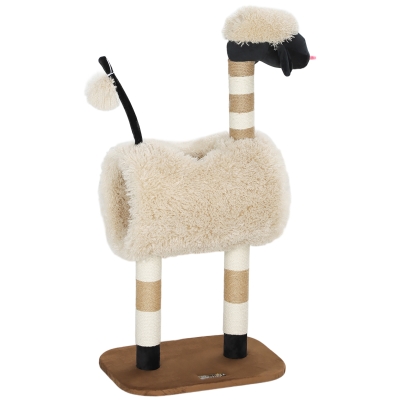
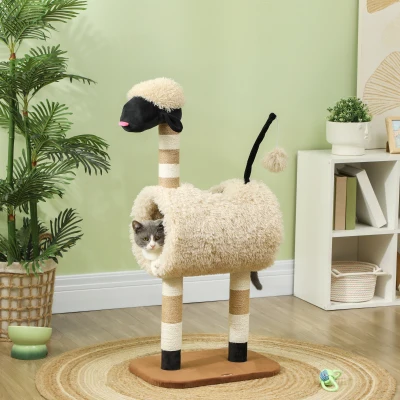
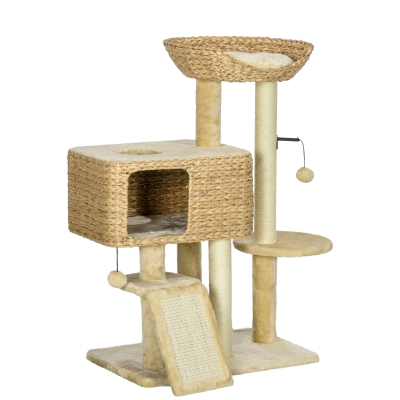
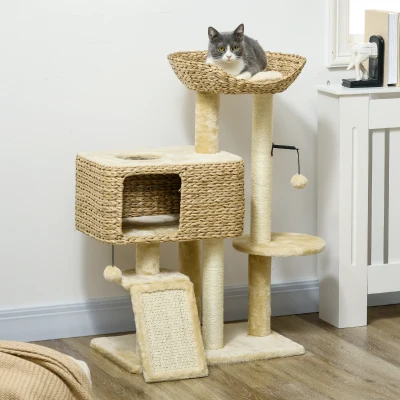





















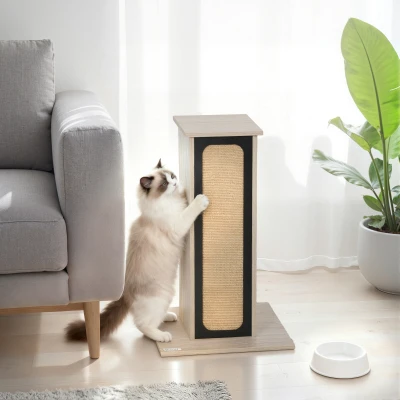

Cat Trees: How to Evaluate Structural Safety and Material Comfort
A cat tree is more than just a playground; it is a territorial investment for your feline. When browsing cat trees, the two most overlooked factors are often the stability of the frame and the tactile comfort of the materials. With PawHut’s current Valentine’s Day selection featuring over 150 cat trees, understanding the engineering behind the plush is key to making a purchase that lasts for years—not just until the novelty wears off.
1. Stability vs. Height: Floor-to-Ceiling vs. Freestanding
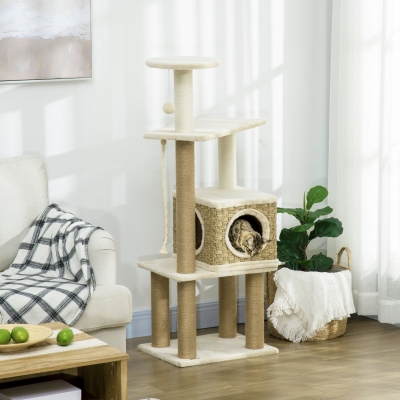
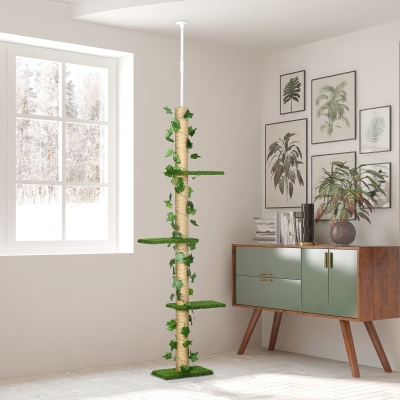
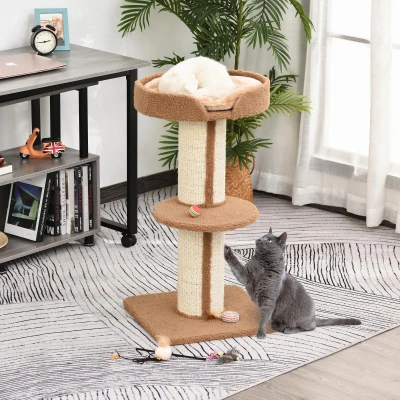
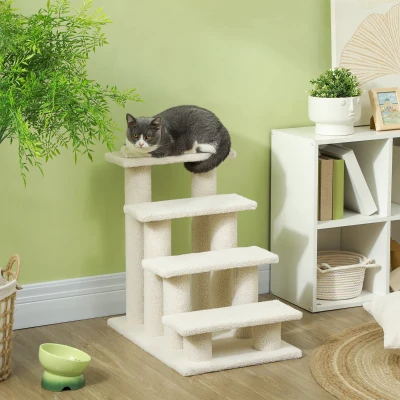
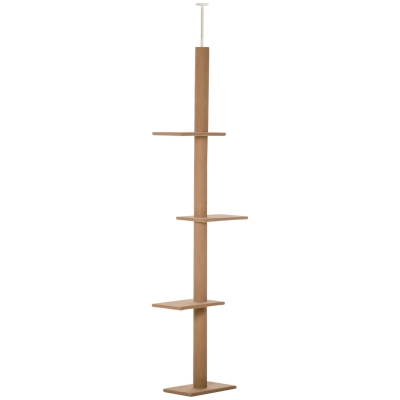
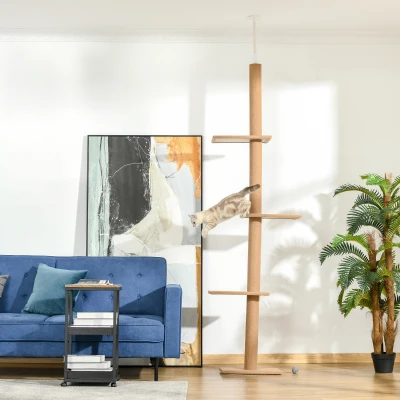
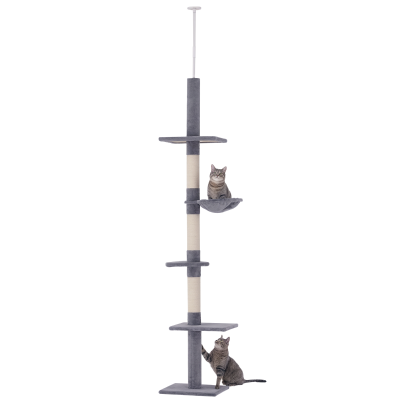
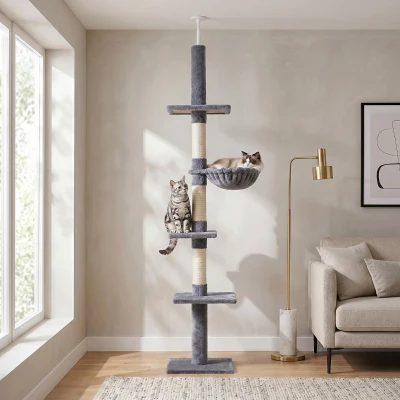
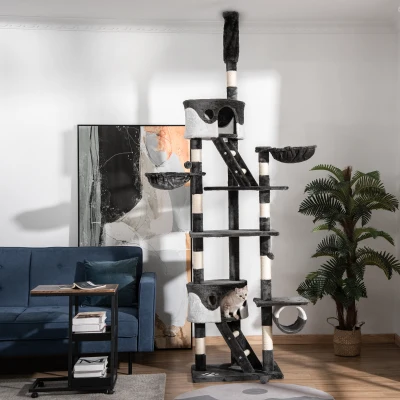
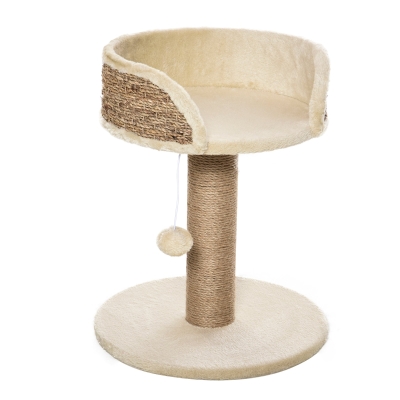
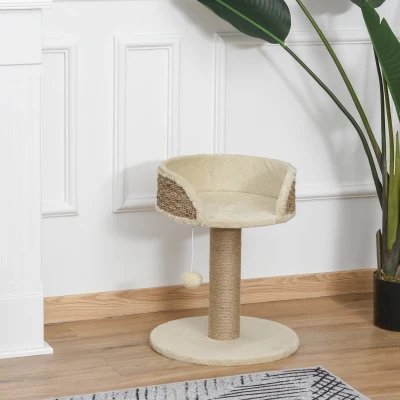
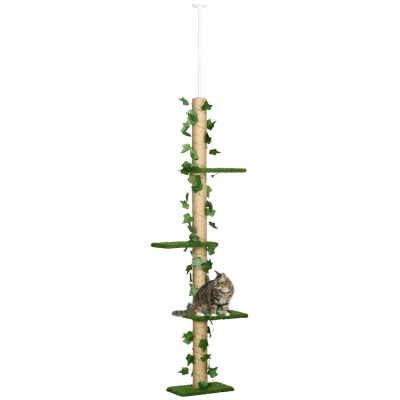
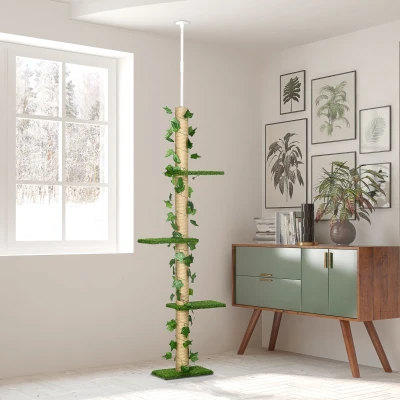
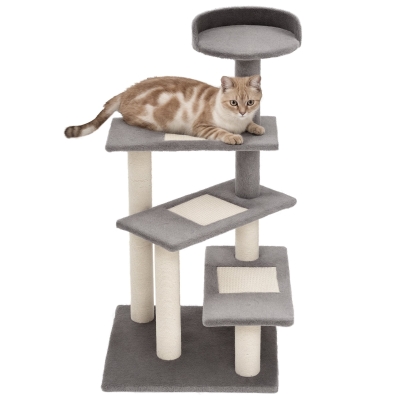
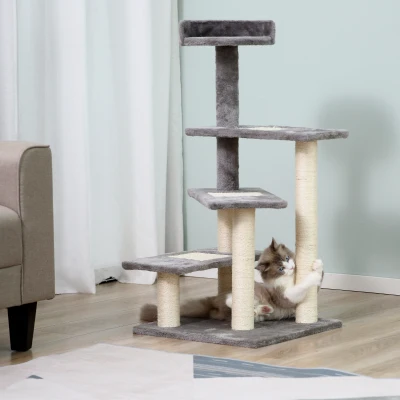
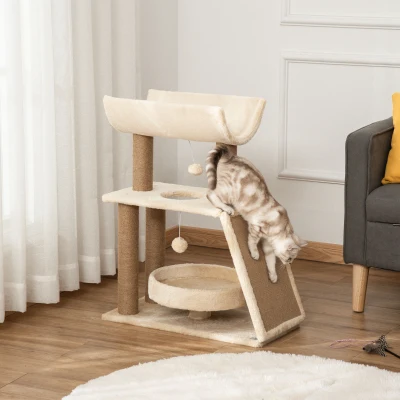
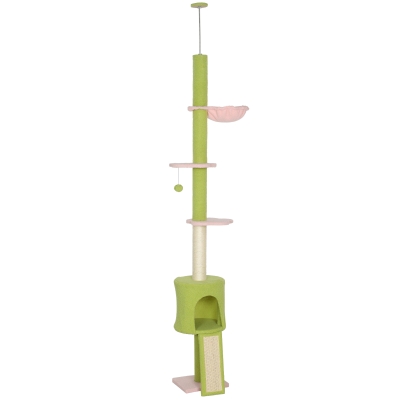
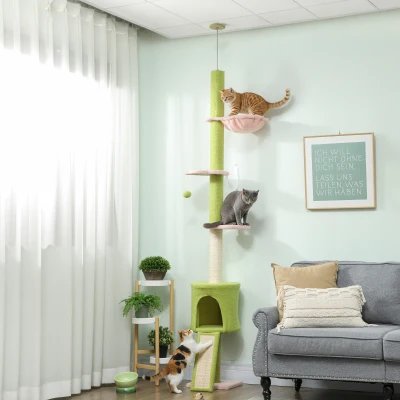
Tall cat trees satisfy a cat’s instinct to survey their kingdom, but height introduces a tipping risk. For multi-cat households or larger breeds such as Maine Coons, we recommend focusing on Floor to Ceiling Cat Trees. These tension-mounted units, like the PawHut 260cm Adjustable Floor-to-Ceiling Tree (Brown), remove the need for wide bases altogether. If you opt for a freestanding tower, always check the base material. Models constructed with Particle Board bases (71 options available) offer far superior weight distribution compared to hollow plastic alternatives—particularly when paired with the Grey or Beige finishes that dominate the current range.
2. Scratching Surfaces: Sisal vs. Plush/Carpet
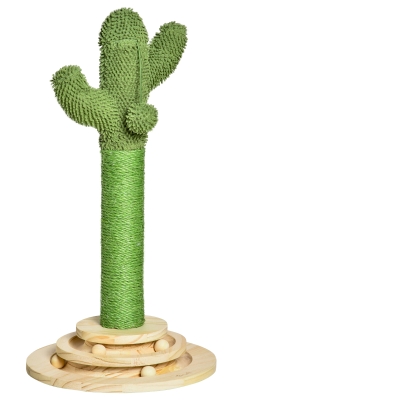
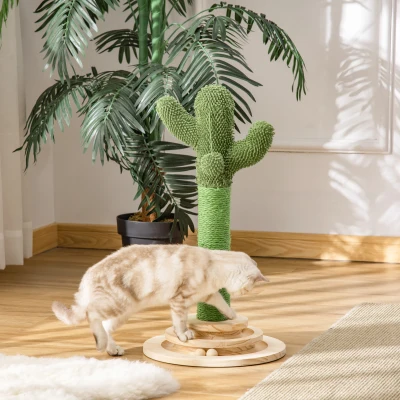
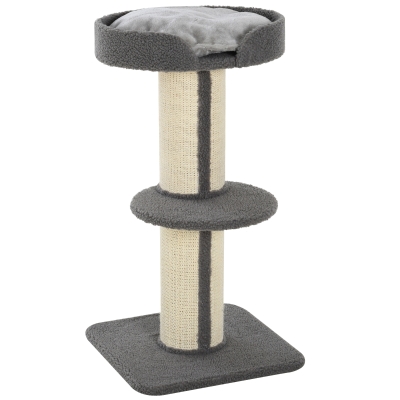
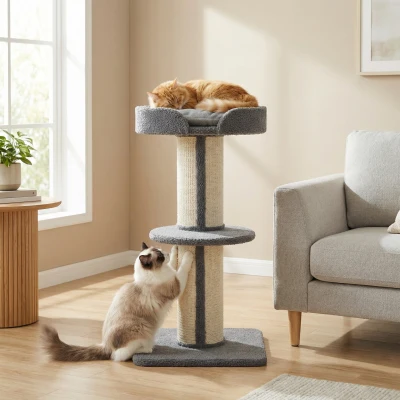
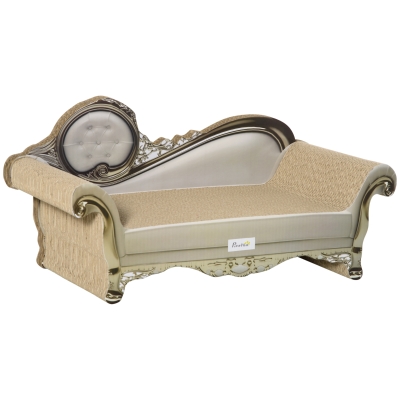
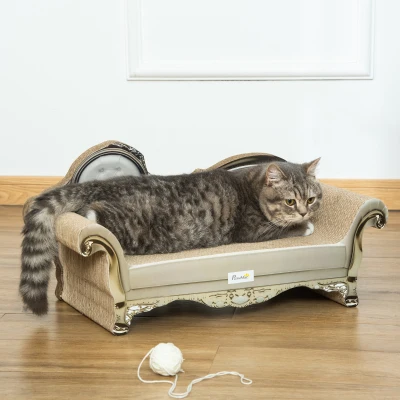
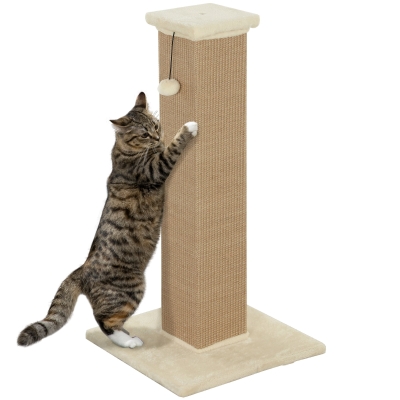
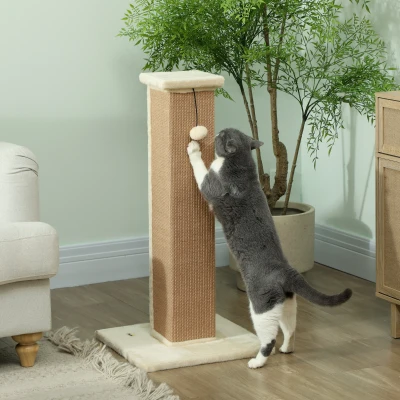
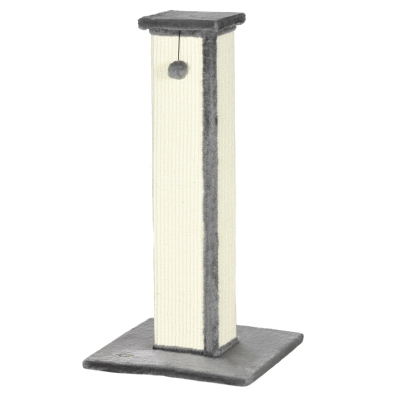
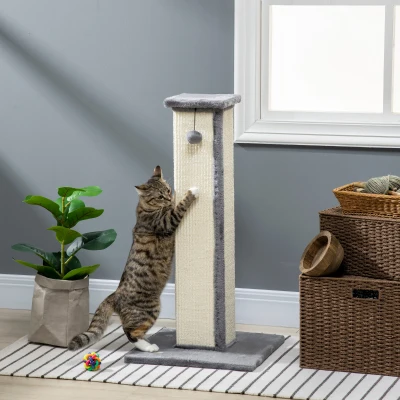
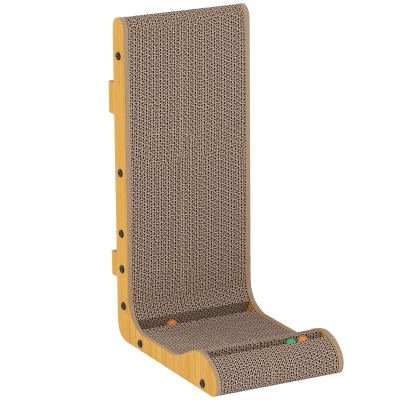
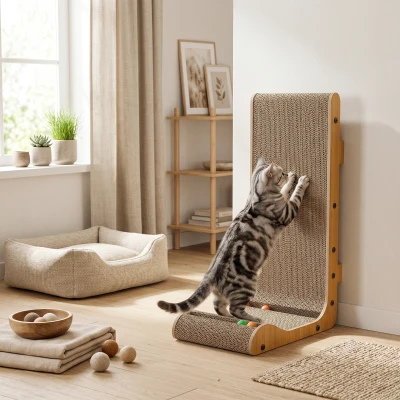
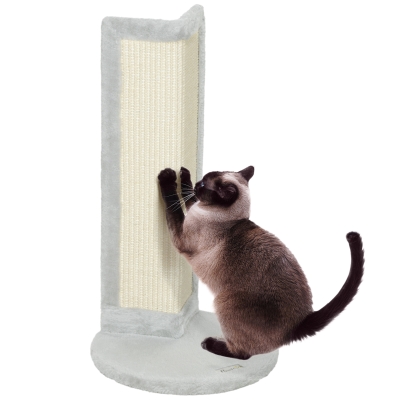
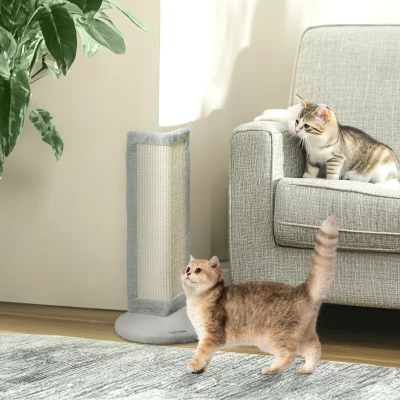
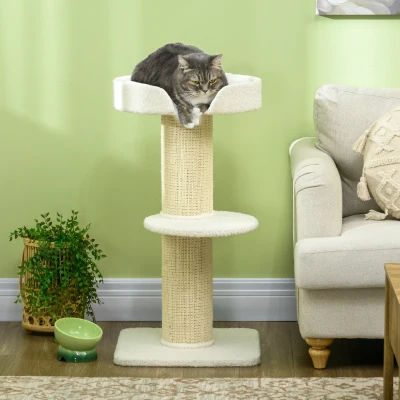
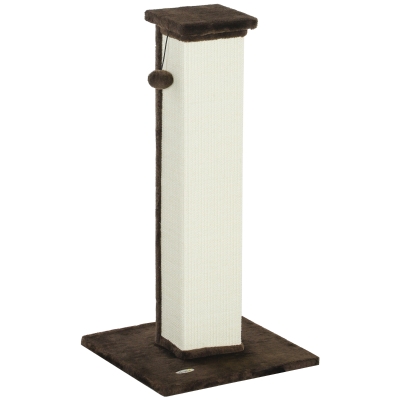
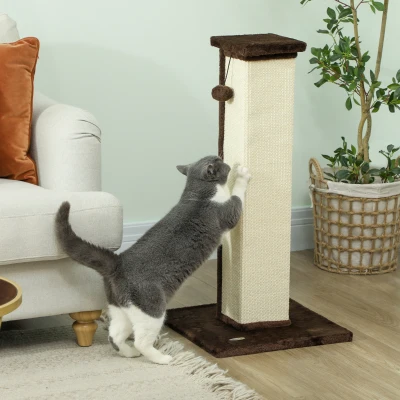
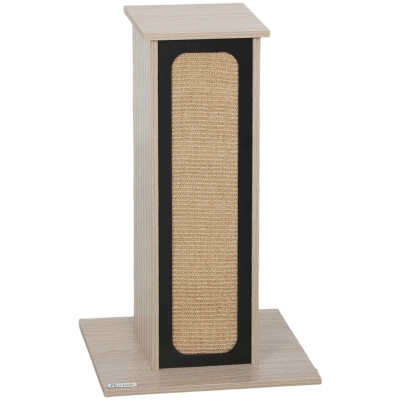
The primary purpose of a scratching post is to allow your cat to shed the outer sheath of their claws. While many cat trees wrap posts in carpet or plush, these materials often snag claws and degrade rapidly. Sisal rope or fabric provides the necessary resistance without excessive lint or fraying. For cats that prefer horizontal scratching, Paperboard scratchers (available in 6 models) are an excellent, recyclable alternative. Below is a comparison of the three main scratching materials currently found in PawHut stock:
| Material | Durability | Best For | Maintenance |
|---|---|---|---|
| Sisal (Rope/Fabric) | High (12-24 months) | Vertical stretching; vigorous scratchers | Brush with wire pet brush; spot clean |
| Carpet/Plush | Medium (6-12 months) | Kittens; cats that favour soft textures | Vacuum using an upholstery attachment |
| Paperboard | Low (2-6 months) | Horizontal scratchers; older cats | Flip mat to unused side; replace fully |
If you are looking for dedicated scratching stations, explore the full range of Cat Scratchers to complement your main tower.
3. Comfort Zones: Condos, Hammocks, and Perches
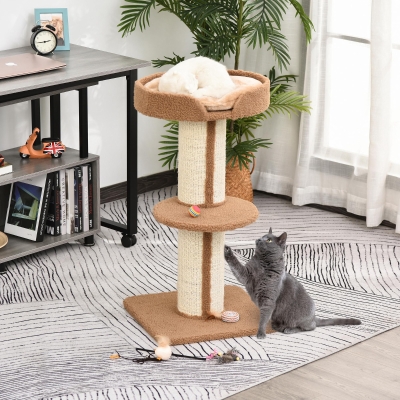
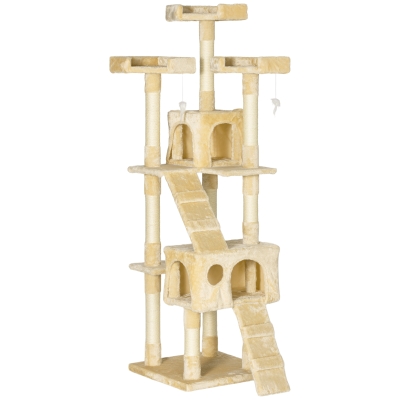
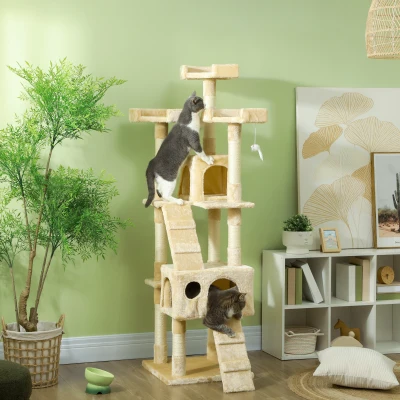
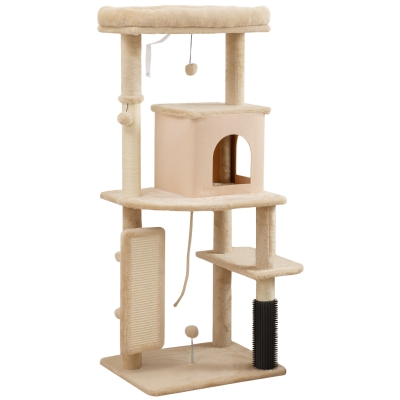
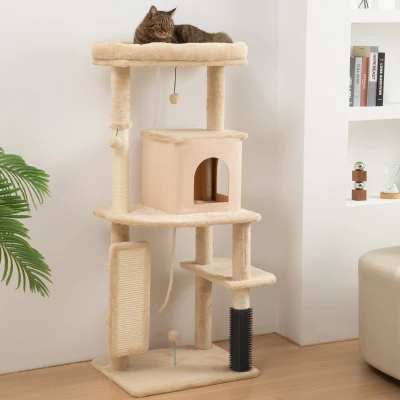
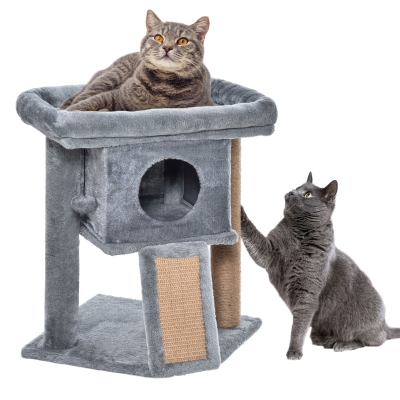
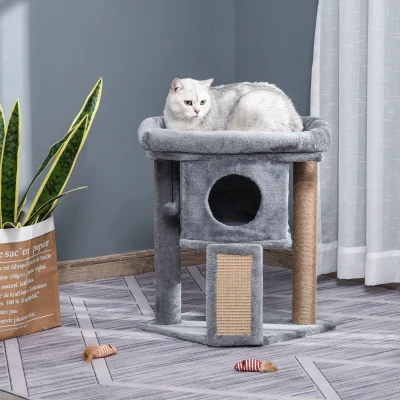
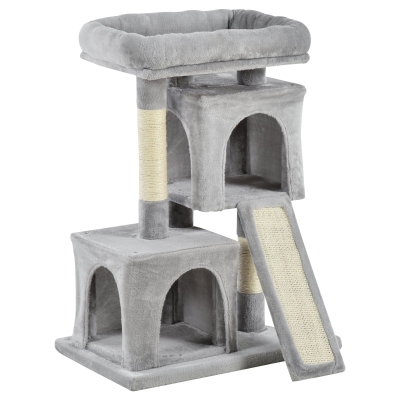
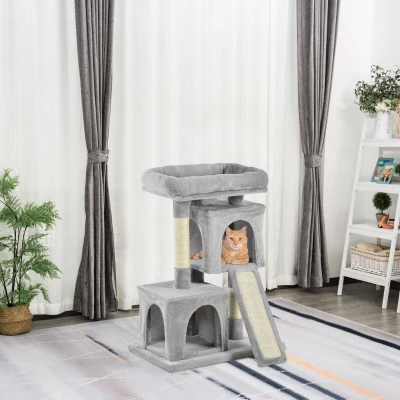
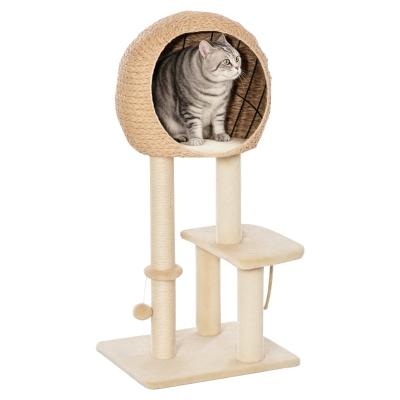
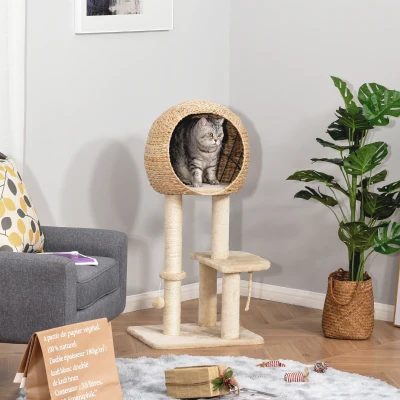
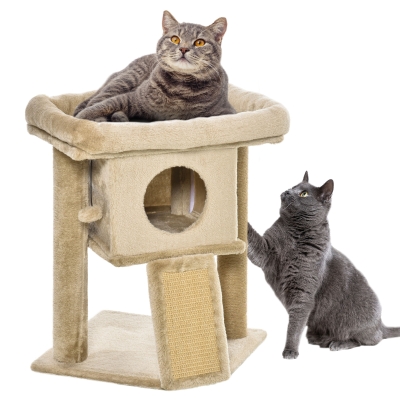
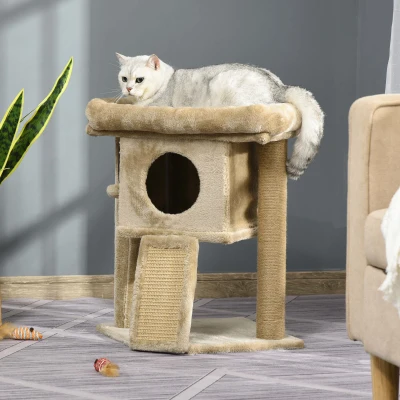
Safety isn’t just about preventing falls—it’s also about psychological comfort. Cat trees that include enclosed Cat Houses or condos provide a secure retreat for more timid cats away from household activity. Conversely, elevated perches and hammocks cater to confident climbers. The PawHut 111cm Cat Tree Tower with Hammock (Grey) skilfully combines both concepts—offering a covered lower compartment for napping and an open hammock for lounging in the sun. When selecting upholstery, note that Grey (89 units) and Beige (31 units) are the dominant colourways, chosen for their ability to disguise light shedding.
4. Wall-Mounted Systems: Saving Floor Space
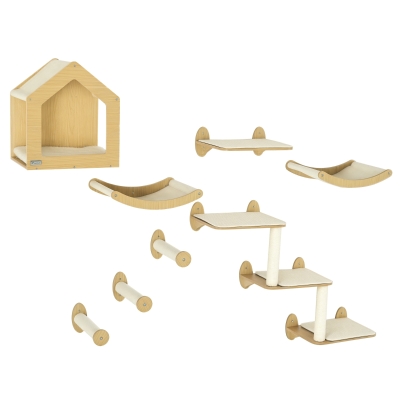
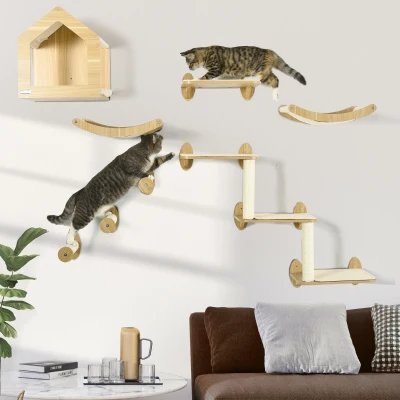
For homes where floor space is at a premium, Cat Climbing Walls offer a modular solution. The PawHut 5-Piece Wall-Mounted Shelves (Brown) transform vertical space into an engaging obstacle course. Safety here hinges entirely on correct installation: these systems must be anchored into wall studs, not simply into plasterboard. This category is ideal for owners who prefer a clean, floating aesthetic over bulky free-standing cat trees.
People Also Ask (FAQ)
1. How do I know if my cat will take to a cat tree?
Observe your cat’s existing habits. If they climb curtains or bookshelves, prioritise tall Floor to Ceiling units. If they scratch furniture, choose Sisal-wrapped posts over plush. For cats that hide under beds, select a model with an enclosed Condo. Scent can also help; rub a blanket your cat sleeps on against the platforms to transfer familiar pheromones.
2. How do you clean a dirty cat tree?
Begin by vacuuming all surfaces with an upholstery brush to remove loose fur and litter. For Plush and Carpet sections, mix a solution of warm water and a mild enzymatic cleaner (avoid bleach or ammonia). Spot clean stains by blotting—do not soak the base boards (Particle Board swells if saturated). For Sisal posts, use a damp cloth with diluted white vinegar to deodorise. Allow to air dry thoroughly before letting your cat back onto the unit.
3. How often should you clean a cat tree?
Carry out a light vacuum of fur every 1-2 weeks. Undertake a deep clean (spot washing and deodorising) every 1-3 months. If your cat has allergies or if the cat trees are positioned in high-traffic areas, increase frequency to monthly. Always inspect screws and tension mechanisms during cleaning to ensure ongoing structural safety.
Showing
1-30
of
197
Results
Popular searches
0 of 5 items