


Last Updated: 03/04/2026

Abstract
When purchasing a garden shed or tool cabinet, consumers typically rely on external dimensions as the primary criterion, often assuming that "bigger is better." However, the actual usability depends on the internal layout and available space, such as door opening sizes, internal clear height, roof slope, corner usage, and storage arrangements. This article analyzes key variables influencing practical capacity from the perspective of space utilization, item dimension compatibility, and movement paths, and proposes a selection method based on "reverse engineering" the required structure based on stored items, in order to avoid the common pitfall of "able to store but difficult to use.
Keywords
Garden Shed, Tool Cabinet, Storage Capacity, Usable Space, Outdoor Storage, Shed Selection
1. Introduction
In real-world purchasing and usage, common user issues include:
- Bikes can be pushed in but hard to pull out
- A lawnmower fits, but turning is impossible
- Long-handled tools can't be stored upright
- A large space, but inefficient use
The root causes of these problems are:
Users focus on "external dimensions," neglecting "usage paths.
- Bikes can be pushed in but hard to pull out
- A lawnmower fits, but turning is impossible
- Long-handled tools can't be stored upright
- A large space, but inefficient use
The root causes of these problems are:
Users focus on "external dimensions," neglecting "usage paths.
2. The Real Composition of Usable Space
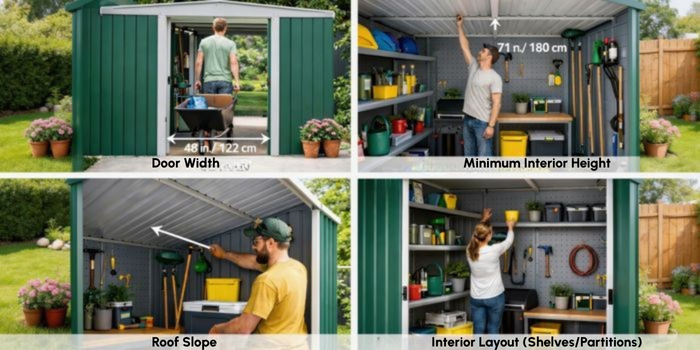
2.1 The actual usable capacity is determined by the following factors:
- Door width (access width)
- Internal clear height
- Roof slope
- Internal layout (shelves/partitions)
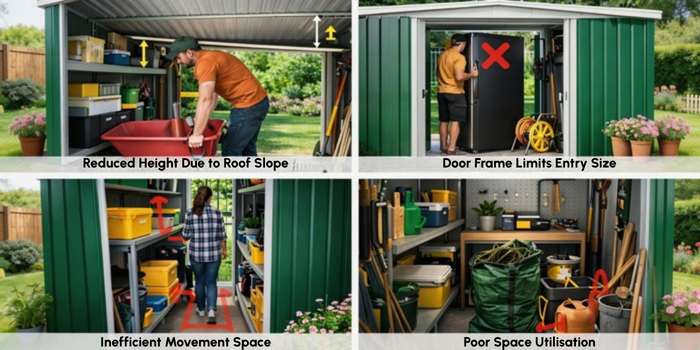
2.2 Why Does Space “Shrink”?
① Roof Slope: Slopes reduce side clearance; peak height ≠ usable height.
② Entry Limits: Doorframe dimensions restrict access regardless of volume.
③ Internal Layout: Inefficient movement paths hinder daily operation.
Improper space utilization leads to perceived spatial shrinkage.
Strategic planning is essential to maximize actual storage capacity.
Core Conclusion:
Usable space is defined by access and geometry — not outer dimensions.
3. Different Items' Requirements for Space Structure
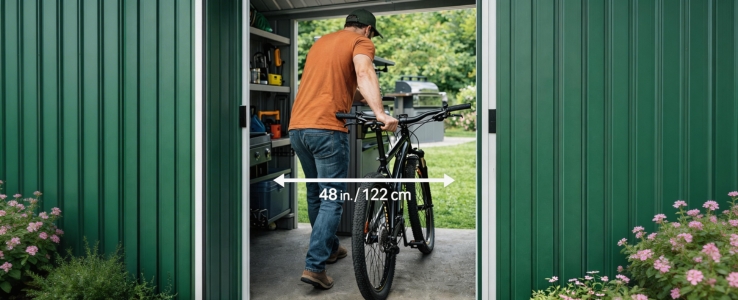
3.1 Bicycle
Key Requirements:
- Door width ≥ handlebar width
- Smooth entry/exit path
Problem Essence:
It’s not about “whether it fits,” but whether it can “be pushed in and out.”
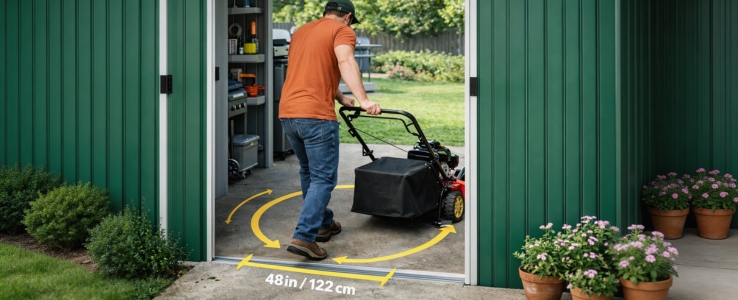
3.2 Lawn Mower
Key Requirements:
- Ground space (footprint)
- Turning radius
Common Problems: Once stored, it’s hard to rotate or remove.
Solution: Reverse the process to remove.
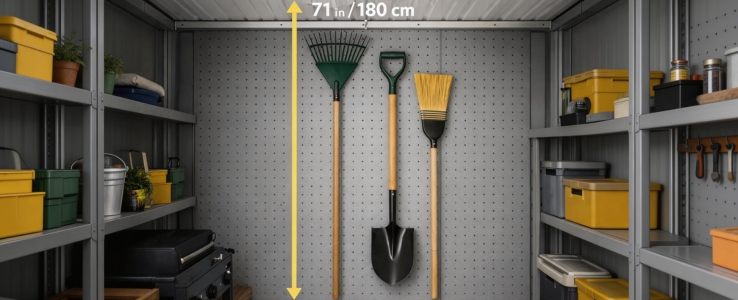
3.3 Long-handled Tools (Rake/Shovel)
Key Requirements:
- Vertical height
- Wall-mounted storage space
Key Point:
Clear height is more important than floor area.
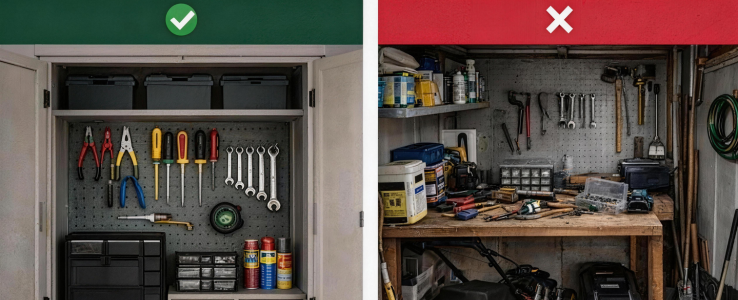
3.4 Small Tools (Hand Tools)
Key Requirements:
- Categorized storage
- Shelf structure
Conclusion:
Small tools are better suited to cabinets rather than sheds.
Core Conclusion:
Different items dictate "space structure," not "space size.
4. Reverse Selection Logic
Step 1: Identify the primary storage objects
Storage Category | Typical Examples |
|---|---|
Bulky Items | Lawn mowers, large equipment, snow blowers |
Vertical Items | Shovels, brooms, rakes, ladders |
Small Items | Hand tools, hardware, gardening accessories |
Step 2: Match structural needs
Storage Requirement | Corresponding Structure |
|---|---|
Push-in storage | Wide doors + open space |
Vertical storage | Height + hooks |
Categorized storage | Shelves + partitions |
Step 3: Select product type
Core Logic:
Storage type = Function, not size
Storage type = Function, not size
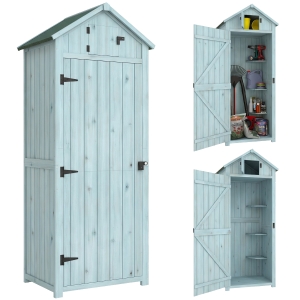
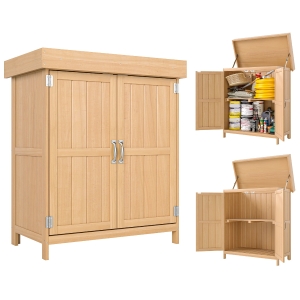
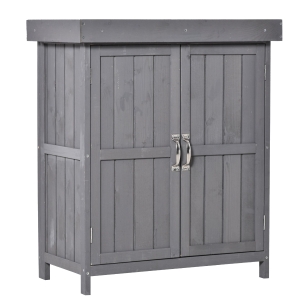
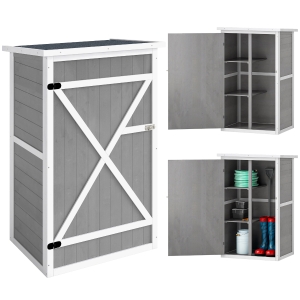
5. When a Tool Cabinet Is Enough
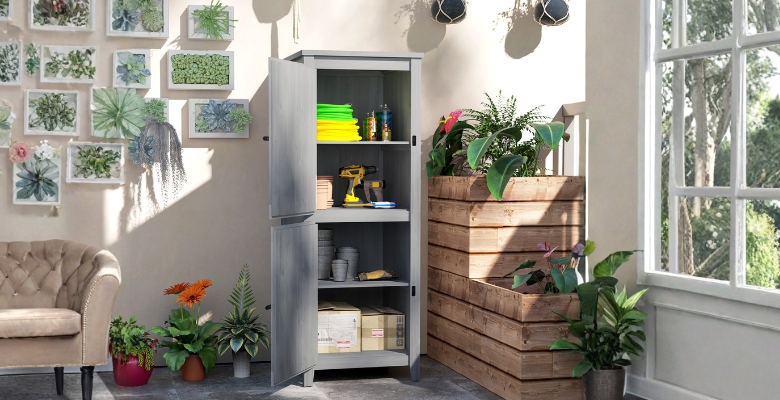

Suitable for:
- Small tools (hand tools, sprayers)
- High categorization needs
- Limited space
Advantages:
- Clear categorization
- Easy access
- Small footprint
Essence:
Cabinet = Organizational Efficiency
DISCOVER MORE

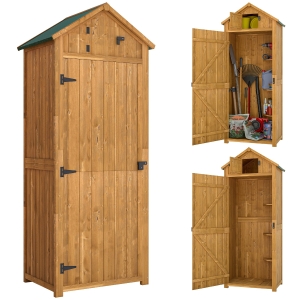




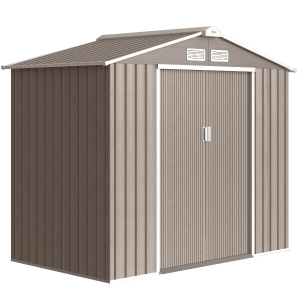
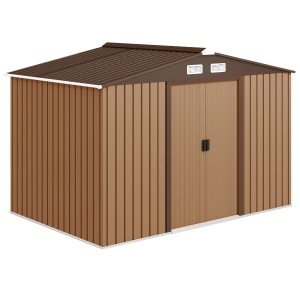
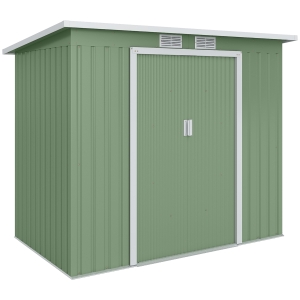
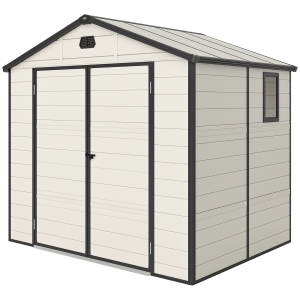
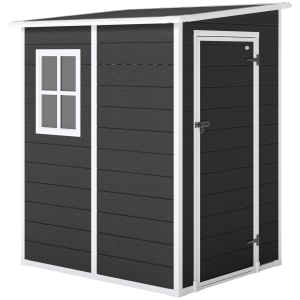
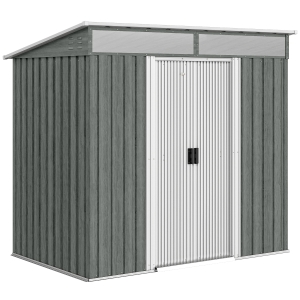
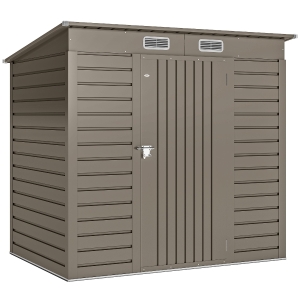
6. When a Shed Is Necessary
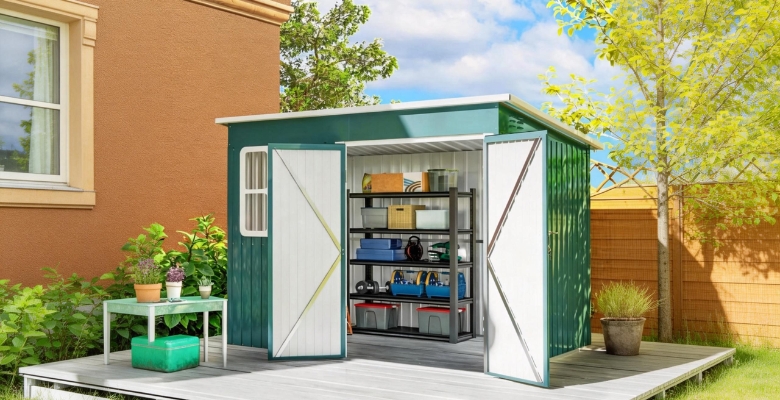
Suitable for:
- Large equipment
- Mixed storage needs
- Need to enter for operations
Advantages:
- Flexible space
- High capacity
- Expandable
Essence:
Shed = Space Capacity
DISCOVER MORE




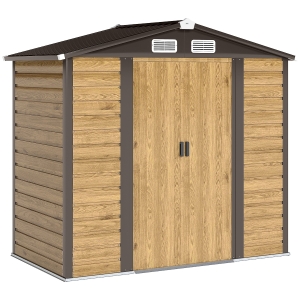

7. How to Avoid the “Fits but Doesn’t Work” Mistake
7.1 Common Mistakes
Focusing only on external dimensions
- Ignoring door width
- Neglecting movement paths
- Overlooking usage frequency
7.2 Correct Judgment Method
Ask these three questions:
- How do I access it? (Access)
- How do I move it? (Movement)
- How do I retrieve it? (Retrieval)
7.3 Key Principles
- Leave operational space (clearance)
- Store high-frequency items near the door
- Avoid “stacked storage”
Core Conclusion:
Storage is not about fitting — it’s about functioning.
Focusing only on external dimensions
- Ignoring door width
- Neglecting movement paths
- Overlooking usage frequency
7.2 Correct Judgment Method
Ask these three questions:
- How do I access it? (Access)
- How do I move it? (Movement)
- How do I retrieve it? (Retrieval)
7.3 Key Principles
- Leave operational space (clearance)
- Store high-frequency items near the door
- Avoid “stacked storage”
Core Conclusion:
Storage is not about fitting — it’s about functioning.
8. Conclusion
This article shows that:
- External dimensions do not represent usable capacity
- Door openings, clear height, and layout determine the user experience
- Different items have different space structure requirements
- Cabinets and sheds differ by function, not by size.
- External dimensions do not represent usable capacity
- Door openings, clear height, and layout determine the user experience
- Different items have different space structure requirements
- Cabinets and sheds differ by function, not by size.
References
Smith, J. R., & Williams, H. T. (1999).
Structural Performance and Durability of Garden Sheds in the UK: A Study on Wind Resistance.
British Journal of Agricultural Engineering, 21(4), 207-219.
Jones, M. L. (2001).
Garden Storage Solutions: An Analysis of Shed and Cabinet Layouts for Domestic Use in the UK. Journal of Home and Garden Storage, 15(3), 102-112.
Baker, S., & Green, P. (2005).
The Influence of Climate on the Performance of Garden Sheds: A UK Perspective. Journal of Building Science, 12(6), 145-158.
Thompson, G., & Clark, P. (2003).
The Effect of Internal Layout on Storage Efficiency in Garden Sheds. UK Journal of Domestic Gardening, 8(2), 118-130.
Harper, D. F., & Robinson, L. (2006).
Tool Storage in Garden Sheds: An Examination of Usable Space and Structure in the UK Market. Journal of Outdoor Storage and Design, 17(4), 209-221.
Williams, A. M. (2004).
Space Optimization in Small Garden Sheds: A Practical Guide for the UK. Journal of Sustainable Garden Design, 14(1), 73-85.
Structural Performance and Durability of Garden Sheds in the UK: A Study on Wind Resistance.
British Journal of Agricultural Engineering, 21(4), 207-219.
Jones, M. L. (2001).
Garden Storage Solutions: An Analysis of Shed and Cabinet Layouts for Domestic Use in the UK. Journal of Home and Garden Storage, 15(3), 102-112.
Baker, S., & Green, P. (2005).
The Influence of Climate on the Performance of Garden Sheds: A UK Perspective. Journal of Building Science, 12(6), 145-158.
Thompson, G., & Clark, P. (2003).
The Effect of Internal Layout on Storage Efficiency in Garden Sheds. UK Journal of Domestic Gardening, 8(2), 118-130.
Harper, D. F., & Robinson, L. (2006).
Tool Storage in Garden Sheds: An Examination of Usable Space and Structure in the UK Market. Journal of Outdoor Storage and Design, 17(4), 209-221.
Williams, A. M. (2004).
Space Optimization in Small Garden Sheds: A Practical Guide for the UK. Journal of Sustainable Garden Design, 14(1), 73-85.
About the Author
Dr. Emily Clarke
Dr. Emily Clarke is a researcher in the field of outdoor storage solutions and garden architecture, focusing on the design and structural performance of garden sheds in the UK. Her research addresses the durability of materials under the UK’s diverse weather conditions and the optimization of space for different types of garden tools and equipment. Dr. Clarke also works on improving usability and efficiency in garden shed layouts for domestic use, particularly in urban settings.
Dr. Emily Clarke is a researcher in the field of outdoor storage solutions and garden architecture, focusing on the design and structural performance of garden sheds in the UK. Her research addresses the durability of materials under the UK’s diverse weather conditions and the optimization of space for different types of garden tools and equipment. Dr. Clarke also works on improving usability and efficiency in garden shed layouts for domestic use, particularly in urban settings.