

Last Updated: 22/04/2026
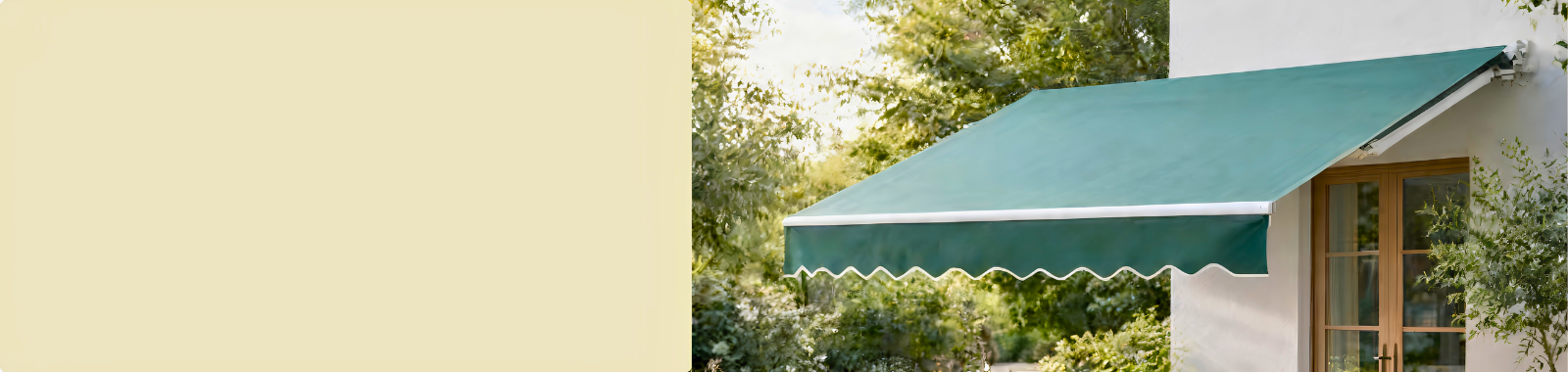
What Really Affects Your Awning

🧱 Wall & Installation
An awning relies on your wall and proper installation to stay stable and secure.
... See more

🌬️Wind & Structure
Wind puts the most pressure on your awning, especially when extended.
... See more

📐Size & Coverage
The actual shade depends on how and where it’s installed — not just the size.
... See more

⏳Use & Lifespan
How you use and maintain it makes the biggest difference in how long it lasts.
... See more
Keywords
Awning, Structural Stability, Cantilever Structure, Wind Load, Wall Mounting, Outdoor Shade, Installation Safety, Durability
1. Introduction
With the growth of outdoor living, awnings have become a common addition to patios, balconies, and commercial spaces. However, many users still treat them as simple furniture rather than external structural installations that rely on proper wall support and load distribution.
Common issues in real-world use include:
- Instability after installation
- Structural misalignment affecting operation
- Sagging or resistance after repeated use
These issues are often mistaken for product defects, but are typically caused by improper installation and usage.
Common issues in real-world use include:
- Instability after installation
- Structural misalignment affecting operation
- Sagging or resistance after repeated use
These issues are often mistaken for product defects, but are typically caused by improper installation and usage.
2. Failure Mechanism Under Wind Load
2.1 Wind Load Behaviour
An awning is a typical cantilever system, with its loads primarily coming from:
1. Self-weight (fabric and frame)
2. Wind load (the main risk factor)
Wind forces are amplified through the fabric and transferred to the brackets and wall fixing points, leading to stress concentration in the structure.
2.2 Typical Failure Pathways
Structural issues in awnings usually develop along the following sequence:
1. Loosening of wall fixing points
2. Bracket deformation
3. Imbalance in load distribution
4. Overall structural failure or detachment
👉 Core Issue: The problem is not product quality, but load behaviour
2.3 Structural Risks of Double-Sided Awnings
Double-sided awnings function as independent structural systems, with key challenges including:
1. Wind load acting from both sides
2. Lack of wall support
3. Increased weight → reduced stability
👉 Requirements:
Ground fixing or high-weight ballast is essential
Not suitable for long-term extended use
3. Structural Determinants
3.1 Installation Environment (Wall Compatibility)
An awning is not a typical piece of furniture, but a system that relies on the structural integrity of the wall.
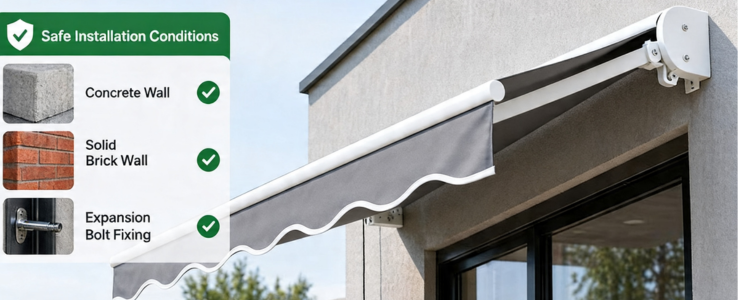
Safe installation conditions:
Concrete wall ✔
Solid brick wall ✔
Expansion bolts / anchor fixings ✔
High-risk environments:
Hollow brick wall ✘
Timber-framed wall ✘
👉 Key Insight: Incorrect installation ≠ minor inconvenience It is a direct safety risk
Safe installation conditions:
Concrete wall ✔
Solid brick wall ✔
Expansion bolts / anchor fixings ✔
High-risk environments:
Hollow brick wall ✘
Timber-framed wall ✘
👉 Key Insight: Incorrect installation ≠ minor inconvenience It is a direct safety risk
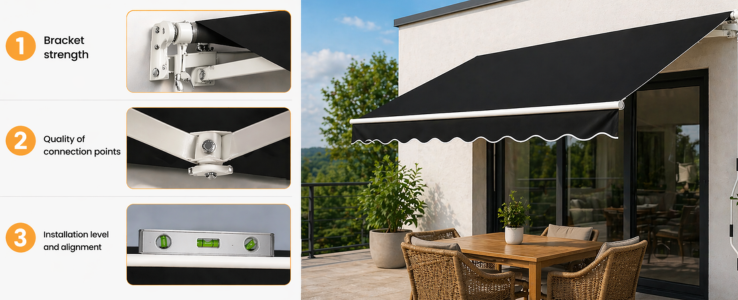
3.2 Structural Connections & Load Distribution (Joints & Load Distribution)
Structural stability depends on:
1. Bracket strength
2. Quality of connection points
3. Installation level and alignment
👉 Poor alignment will lead to:
1. Uneven load distribution
2. Jerky or difficult operation
3. Premature structural fatigue
1. Bracket strength
2. Quality of connection points
3. Installation level and alignment
👉 Poor alignment will lead to:
1. Uneven load distribution
2. Jerky or difficult operation
3. Premature structural fatigue
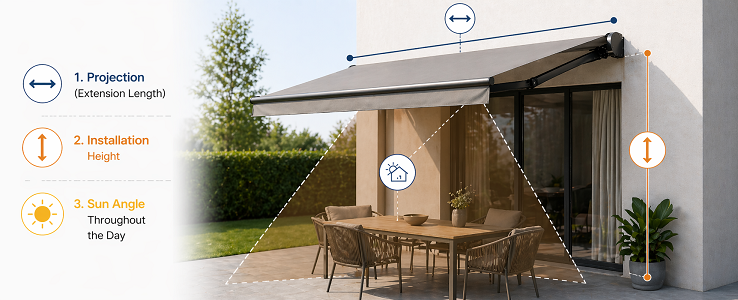
3.3 Geometry & Coverage (Geometry & Coverage)
A common misconception:
Stated size = usable coverage
In reality, coverage depends on:
1. Projection (extension length)
2. Installation height
3. Sun angle throughout the day
👉 Conclusion: Shading performance is a dynamic spatial result, not a fixed measurement
Stated size = usable coverage
In reality, coverage depends on:
1. Projection (extension length)
2. Installation height
3. Sun angle throughout the day
👉 Conclusion: Shading performance is a dynamic spatial result, not a fixed measurement
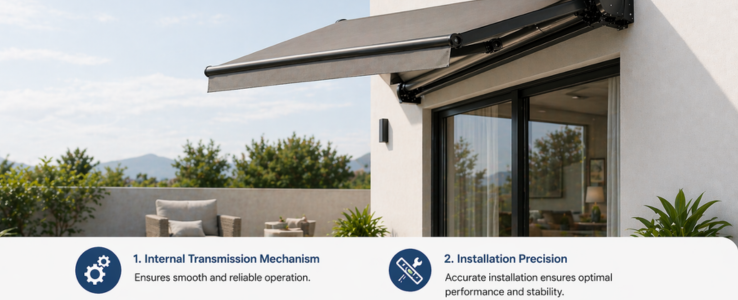
3.4 Operational System & User Experience (Operational Stability)
Ease of operation depends on:
1. Internal transmission mechanism
2. Installation precision
Common issues:
1. Difficult manual operation
2. Motorised systems jamming or stuttering
👉 Root Cause: These are not “feature issues”, but structural precision issues
1. Internal transmission mechanism
2. Installation precision
Common issues:
1. Difficult manual operation
2. Motorised systems jamming or stuttering
👉 Root Cause: These are not “feature issues”, but structural precision issues
4. Environmental Conditions and Their Impact on Performance
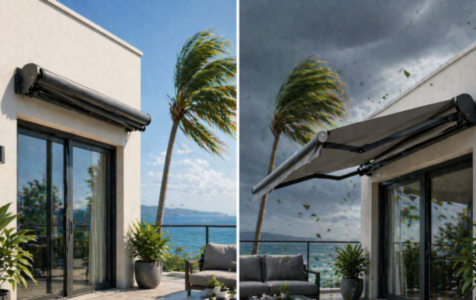
4.1 Wind Conditions
1. The awning must be retracted during strong winds
2. Prolonged extension accelerates structural fatigue
2. Prolonged extension accelerates structural fatigue
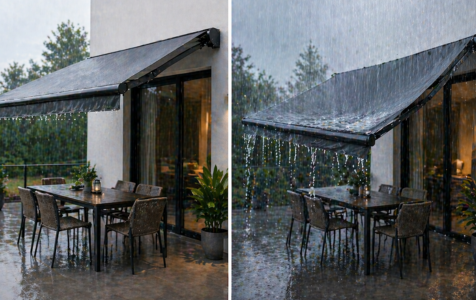
4.2 Rain Exposure
The water resistance of an awning has clear limitations:
1. Light rain: manageable
2. Heavy rain: water accumulation may cause sagging
1. Light rain: manageable
2. Heavy rain: water accumulation may cause sagging
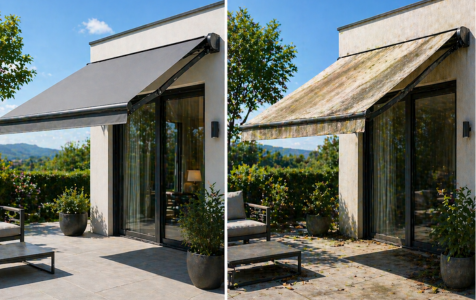
4.3 Sun Exposure and Aging
Durability is not determined solely by material, but by how the awning is used.
Key influencing factors:
1. Continuous exposure to outdoor conditions
2. Whether the awning is retracted in time
3. Exposure to extreme weather
1. Continuous exposure to outdoor conditions
2. Whether the awning is retracted in time
3. Exposure to extreme weather
Conclusion
When choosing an awning, what truly matters is not which one looks better, but whether it suits your specific environment.
The safety, usability, and durability of an awning depend on three key factors: 1. Whether your wall is suitable for installation (this determines stability)
2. Whether weather conditions—especially wind—are properly considered during use
3. Whether the awning is correctly retracted and maintained in daily use (this directly affects lifespan)
If these conditions are met, even a basic model can perform reliably for years. On the other hand, even a high-end product may become loose, deformed, or damaged in a short time if used incorrectly.
👉 Simply put: Choosing right + installing right + using right matters more than buying expensive
The safety, usability, and durability of an awning depend on three key factors: 1. Whether your wall is suitable for installation (this determines stability)
2. Whether weather conditions—especially wind—are properly considered during use
3. Whether the awning is correctly retracted and maintained in daily use (this directly affects lifespan)
If these conditions are met, even a basic model can perform reliably for years. On the other hand, even a high-end product may become loose, deformed, or damaged in a short time if used incorrectly.
👉 Simply put: Choosing right + installing right + using right matters more than buying expensive
References
1. British Standards Institution (BSI). (2018). BS EN 13561: External blinds and awnings – Performance requirements including safety. London: British Standards Institution.
2. British Standards Institution (BSI). (2005). BS EN 1991-1-4: Eurocode 1 – Actions on structures – Wind actions. London: British Standards Institution. 3. British Standards Institution (BSI). (2002). BS EN 1990: Basis of structural design. London: British Standards Institution.
4. British Standards Institution (BSI). (2012). BS 8539: Code of practice for the selection and installation of post-installed anchors in concrete and masonry. London: British Standards Institution.
5. National House-Building Council (NHBC). (2023). NHBC Standards: Technical Requirements for External Structures and Wall Fixings. Milton Keynes: NHBC.
6. Building Research Establishment (BRE). (2015). BRE Digest 489: Wind loads on roof structures. Watford: Building Research Establishment.
7. Health and Safety Executive (HSE). (2020). Safe installation and use of external fixtures. London: HSE.
8. Royal Institution of Chartered Surveyors (RICS). (2016). RICS Guidance Note: Surveying safely and structural considerations. London: RICS.
2. British Standards Institution (BSI). (2005). BS EN 1991-1-4: Eurocode 1 – Actions on structures – Wind actions. London: British Standards Institution. 3. British Standards Institution (BSI). (2002). BS EN 1990: Basis of structural design. London: British Standards Institution.
4. British Standards Institution (BSI). (2012). BS 8539: Code of practice for the selection and installation of post-installed anchors in concrete and masonry. London: British Standards Institution.
5. National House-Building Council (NHBC). (2023). NHBC Standards: Technical Requirements for External Structures and Wall Fixings. Milton Keynes: NHBC.
6. Building Research Establishment (BRE). (2015). BRE Digest 489: Wind loads on roof structures. Watford: Building Research Establishment.
7. Health and Safety Executive (HSE). (2020). Safe installation and use of external fixtures. London: HSE.
8. Royal Institution of Chartered Surveyors (RICS). (2016). RICS Guidance Note: Surveying safely and structural considerations. London: RICS.
About the Author
Dr. Adrian Cole
Dr. Adrian Cole is a specialist in outdoor structural systems, focusing on the performance and safety of awnings and lightweight external installations. His research centres on structural load behaviour, wall anchoring methods, and the long-term durability of outdoor shading solutions in variable weather conditions. With a background in structural engineering, he has worked extensively on projects involving wind exposure, installation stability, and failure analysis of external fixtures. His work aims to bridge the gap between engineering principles and everyday user decisions, helping consumers better understand how to safely install and use outdoor equipment.
Dr. Adrian Cole is a specialist in outdoor structural systems, focusing on the performance and safety of awnings and lightweight external installations. His research centres on structural load behaviour, wall anchoring methods, and the long-term durability of outdoor shading solutions in variable weather conditions. With a background in structural engineering, he has worked extensively on projects involving wind exposure, installation stability, and failure analysis of external fixtures. His work aims to bridge the gap between engineering principles and everyday user decisions, helping consumers better understand how to safely install and use outdoor equipment.