


Last Updated: 01/04/2026
Abstract
Consumers often assume that garden sheds function as fully waterproof structures similar to residential buildings. In reality, sheds are designed as weather-resistant systems, where the primary objective is to manage water through drainage, ventilation, and material overlap rather than to achieve complete impermeability.
This study examines the rain performance of garden sheds from three perspectives: structural design principles, pathways of water ingress, and environmental interactions. The findings demonstrate that most moisture-related issues arise not from material failure but from improper drainage design, installation errors, and ground conditions. Practical strategies are proposed to optimize structural detailing and installation methods, thereby minimizing water ingress and moisture accumulation risks.
Keywords
1. Introduction
With the growing demand for outdoor storage, metal and wooden garden sheds have become widely adopted in residential environments. However, users frequently report the following issues:
- Internal dampness or minor water ingress after heavy rain
- Rust formation due to ground moisture
- Water penetration through door gaps or panel joints
The root cause of these issues lies in a fundamental misunderstanding:
Garden sheds are often perceived as watertight structures, whereas they are in fact weather-resistant systems.
This distinction is critical for both product design and user expectations.
2. Non-Watertight Design Principle of Garden Sheds
2.1 Structural Differences from Residential Buildings
Item | Residential Buildings | Garden Sheds |
|---|---|---|
Waterproofing Mechanism | Complete Sealing | Drainage and Water Flow Management |
Structural System | Multi-layer Waterproofing and Sealing Layer | Single-layer Panel and Modular Assembly |
Airtightness | High | Low (Airflow Requested) |
2.2 Why Complete Sealing Is Not Feasible
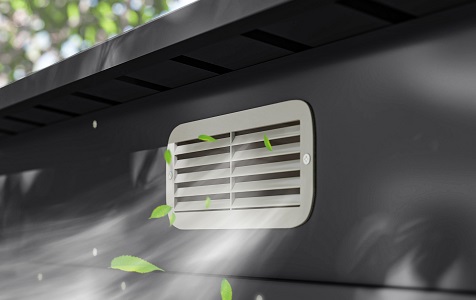
Ventilation Requirements
- Prevent internal condensation
- Reduce humidity buildup
- Maintain airflow for stored items
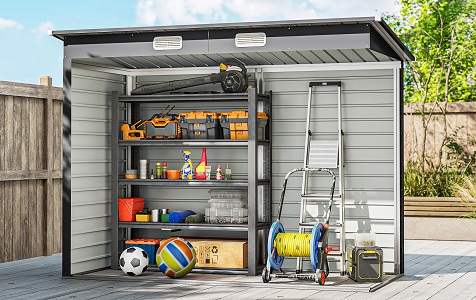
Cost and Construction Constraints
- Absence of full sealant systems
- Limited structural complexity
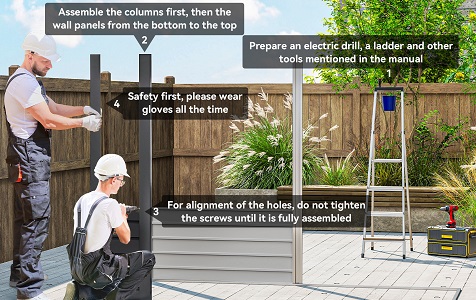
Panel-Based Assembly
- Use of overlapping panels instead of monolithic structures
- Presence of unavoidable micro-gaps
3. Causes of Water Ingress
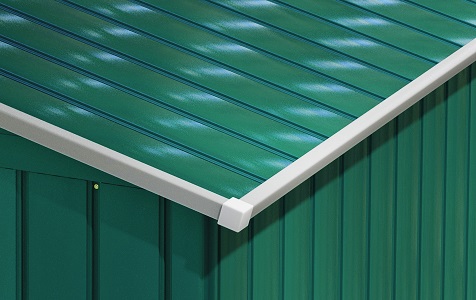
3.1 Panel Overlap and Seam Design
Improper panel configuration can create unintended water pathways:
Incorrect overlap direction (against water flow)
Insufficient overlap length
Mechanism:
Water is often guided into the structure, rather than passively seeping through materials.
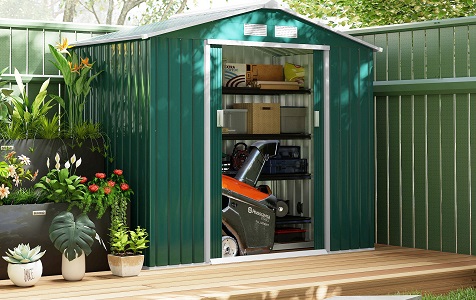
3.2 Ground Moisture and Base Conditions
Ground interaction is a major but underestimated factor:
Uneven surfaces leading to water pooling
Direct ground contact causing moisture absorption
Consequences:
Moisture entering from below
Persistent damp microclimate inside the shed
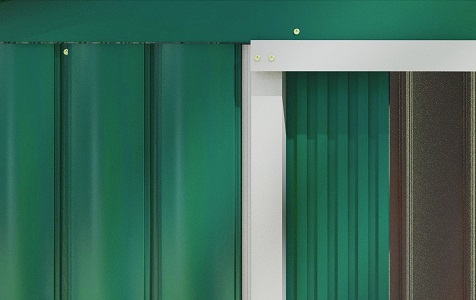
3.3 Door Gaps and Openings
Door systems are typically not fully sealed:
Gaps at the bottom edge
Air-driven rain intrusion
High-risk conditions:
Wind-driven rain
Open or exposed environments
4. Design and Installation Strategies for Improved Weather Resistance
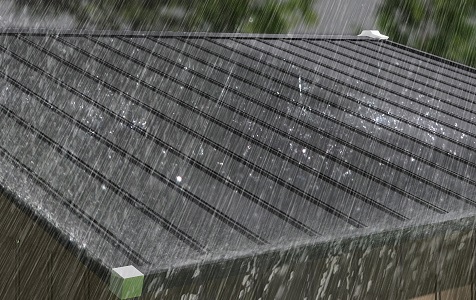
4.1 Optimizing Overlap and Sealing
Recommended strategies:
Ensure panel overlaps follow natural water flow direction
Increase overlap coverage length
Apply sealants or waterproof tapes at critical joints
Principle:
Instead of stopping water, guide it to flow away from vulnerable areas.
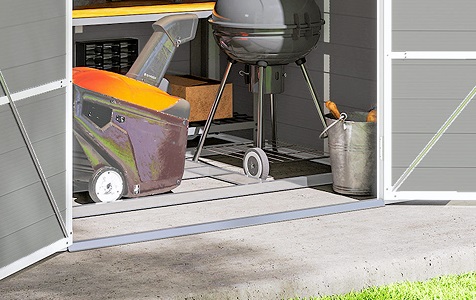
4.2 Protecting Openings
Key measures:
Install thresholds at door bottoms
Avoid positioning doors toward prevailing wind directions
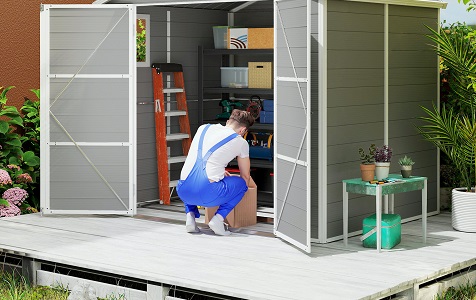
4.3 Improving Base and Ground Conditions
① Elevated Base Design
Prevent direct ground contact
Reduce capillary moisture rise
② Drainage Layer Installation
Use gravel or crushed stone base
Facilitate rapid water dispersion
③ Rigid Foundation Systems
Concrete slabs or decking
Improve structural stability and reduce standing water
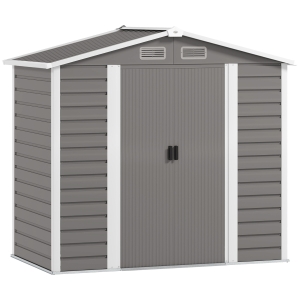
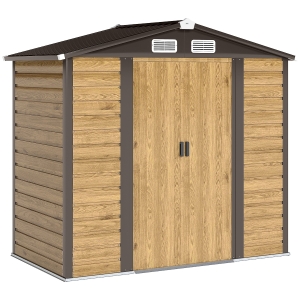
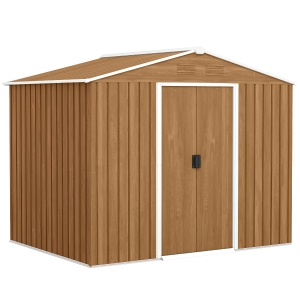
More garden sheds


5. Conclusion
This study demonstrates that garden sheds are not waterproof structures but weather-resistant systems. Their performance depends on a combination of:
- Panel overlap configuration
- Opening and joint design
- Ground conditions and installation quality
Understanding sheds as drainage-oriented structures—rather than sealed enclosures—allows users to better manage moisture risks and extend the functional lifespan of outdoor storage systems.
References
European Committee for Standardization. (2019). EN 13031-1: Greenhouses – Design and construction. Brussels.
FAO. (2013). Good Agricultural Practices for Greenhouse Vegetable Crops. Food and Agriculture Organization of the United Nations.
Ashrae. (2021). ASHRAE Handbook—Fundamentals. American Society of Heating, Refrigerating and Air-Conditioning Engineers.
Pacheco, R., Ordóñez, J., & Martínez, G. (2012). Energy efficient design of building envelopes. Renewable and Sustainable Energy Reviews.
ISO 15927-3. (2009). Hygrothermal performance of buildings — Calculation of driving rain index. International Organization for Standardization.
Hall, M. R., & Djerbib, Y. (2004). Moisture ingress in building envelopes. Construction and Building Materials.
About the Author
Dr. Ethan Calder
Dr. Ethan Calder is a building systems researcher specializing in lightweight outdoor structures and environmental performance. His work focuses on moisture behavior, passive drainage systems, and structural durability in small-scale architectural applications. He has contributed to multiple industry studies on outdoor storage design and climate-adaptive construction strategies.