


Last Updated: 27/04/2026

While most customers choose a swing chair based on its size, seating capacity, and aesthetic appeal, its true day-to-day performance depends on factors that are often overlooked: dynamic load distribution, structural stability, and environmental resilience.
This guide explains why some swing chairs may feel unstable over time, lose their structural integrity, or show signs of wear sooner than expected. More importantly, we introduce a practical evaluation framework based on four critical dimensions to help you make an informed investment:
This guide explains why some swing chairs may feel unstable over time, lose their structural integrity, or show signs of wear sooner than expected. More importantly, we introduce a practical evaluation framework based on four critical dimensions to help you make an informed investment:

Suitability
Does the piece truly complement your available space and align with your lifestyle?
... See more
... See more

Stability
Will the swing remain steadfast and secure under real-world usage and dynamic movement?
... See more

Durability
Can it withstand long-term use and remain resilient against the unpredictable British elements?

Expectations
Does the product’s performance and maintenance requirement align with your practical reality?
By understanding these core principles, you will be well-equipped to avoid common purchasing pitfalls and select a swing chair that delivers exceptional stability and comfort for years to come.
Most people approach buying a swing chair with the same criteria they would use for a standard indoor sofa.
👉 Typically, the focus remains on:
Capacity: How many people can it seat?
Dimensions: What are the overall measurements?
Comfort: How plush do the cushions look?
However, a swing chair is fundamentally different from static furniture. As a dynamic, moving structure, it must meet a specific set of engineering requirements:
It is under constant dynamic load (motion-based stress).
It interacts directly with the ground surface and the surrounding environment.
It is subjected to repeated stress cycles over time.
This explains why common customer feedback often sounds like this:
"It feels a bit wobbly."
"It started squeaking after a few weeks."
"It isn't as sturdy as I expected."
👉 In most cases, the issue isn't solely down to product quality.
👉 Rather, it is a discrepancy between user expectations and the laws of physics under real-world conditions.
👉 Typically, the focus remains on:
Capacity: How many people can it seat?
Dimensions: What are the overall measurements?
Comfort: How plush do the cushions look?
However, a swing chair is fundamentally different from static furniture. As a dynamic, moving structure, it must meet a specific set of engineering requirements:
It is under constant dynamic load (motion-based stress).
It interacts directly with the ground surface and the surrounding environment.
It is subjected to repeated stress cycles over time.
This explains why common customer feedback often sounds like this:
"It feels a bit wobbly."
"It started squeaking after a few weeks."
"It isn't as sturdy as I expected."
👉 In most cases, the issue isn't solely down to product quality.
👉 Rather, it is a discrepancy between user expectations and the laws of physics under real-world conditions.
Suitability: Why a ‘3-Seater’ Doesn’t Automatically Guarantee Comfort for Three
The stated capacity of a swing chair is often a technical limit—not necessarily a measure of genuine seating comfort.
👉 A common misconception:
❌ “3-Seater” = A comfortable seat for three adults.
In reality, the seat width provided for each person is often significantly narrower than that of a standard living room sofa. While the frame might technically support the weight, the actual "elbow room" can be quite restrictive for three fully-grown adults.
👉 A common misconception:
❌ “3-Seater” = A comfortable seat for three adults.
In reality, the seat width provided for each person is often significantly narrower than that of a standard living room sofa. While the frame might technically support the weight, the actual "elbow room" can be quite restrictive for three fully-grown adults.
What truly defines comfort
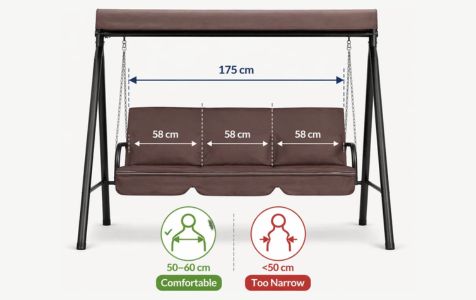
Seat width per person
Ideal comfort width: 50–60 cm per person.
Many "3-seater" swing chairs compromise on individual space to fit the frame. This results in a cramped experience and restricted freedom of movement.
Many "3-seater" swing chairs compromise on individual space to fit the frame. This results in a cramped experience and restricted freedom of movement.
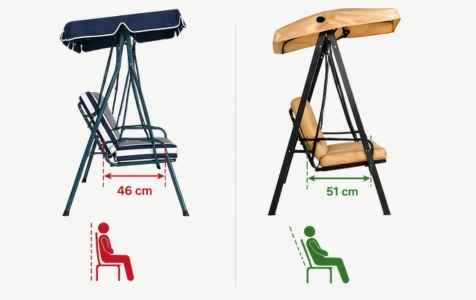
Seat depth
Shallow depth: Encourages a more formal, upright posture.
Generous depth: Allows for a relaxed, semi-reclined lounging experience.
Generous depth: Allows for a relaxed, semi-reclined lounging experience.
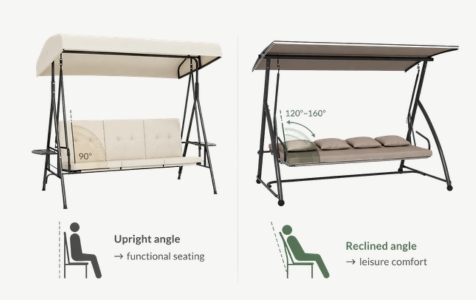
Backrest angle
Upright angle: Best for functional sitting, such as reading or enjoying tea.
Reclined angle: Designed for ultimate leisure and unwinding.
Reclined angle: Designed for ultimate leisure and unwinding.
Practical examples


Select your perfect swing chair
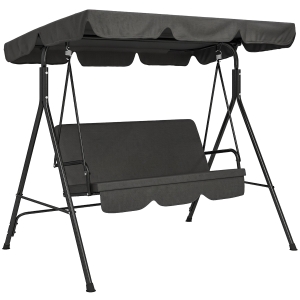

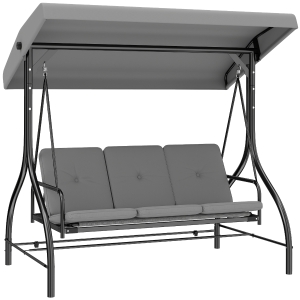
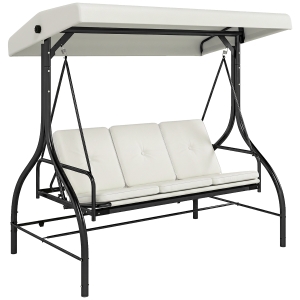


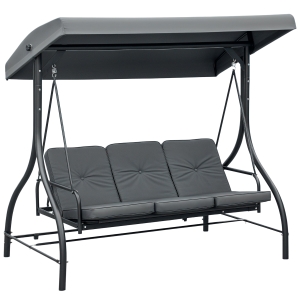
Summary at a glance
Size determines whether it fits your garden.
Construction defines how well it actually performs in everyday use.
Construction defines how well it actually performs in everyday use.
Stability: Why load capacity isn't the same as true safety
The actual safe weight limit must always exceed the stated nominal load.
200 kg load capacity ≠ absolute safety
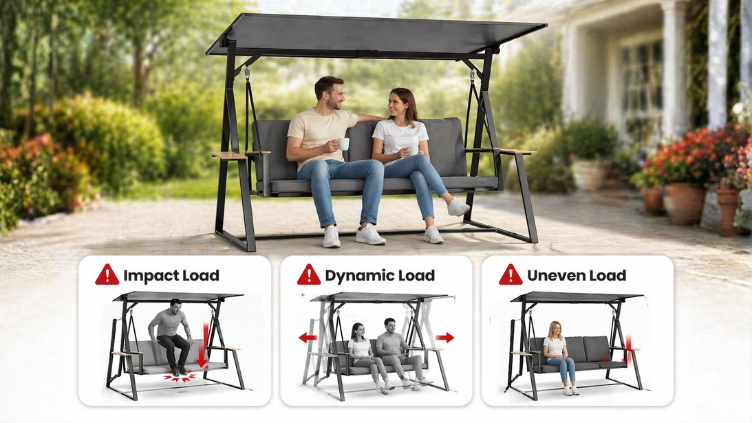

What actually happens during use

Impact load
Occurs when someone sits down abruptly.
This creates a momentary peak force.
Occurs when someone sits down abruptly.
This creates a momentary peak force.
Dynamic load
The continuous swinging motion leads to repetitive cyclic stress.
The continuous swinging motion leads to repetitive cyclic stress.
Uneven load
One side being heavier than the other causes torsion and imbalance.
One side being heavier than the other causes torsion and imbalance.

Pro tip
👉 In practice, the combination of these forces often exceeds the stated nominal load.


Stability is not just a product feature

Ground type
Grass is softer and less stable; concrete offers significantly better firm footing.
Grass is softer and less stable; concrete offers significantly better firm footing.
Ground level
Uneven surfaces amplify structural wobbling.
Uneven surfaces amplify structural wobbling.
Anchoring and fixing
Frames that aren't secured can shift or loosen over time.
Frames that aren't secured can shift or loosen over time.

Hidden risks
The actual stress during use is often higher than anticipated, especially when:
Users swing actively and forcefully.
Multiple people sit with uneven weight distribution.
Children use the swing chair dynamically as play equipment.
Users swing actively and forcefully.
Multiple people sit with uneven weight distribution.
Children use the swing chair dynamically as play equipment.
Summary at a glance
Stability = construction × environment × assembly
A lack of understanding regarding this equation is the primary reason for perceived "instability".
A lack of understanding regarding this equation is the primary reason for perceived "instability".
Durability: Why a swing chair doesn't "suddenly" break
Structural issues develop gradually, not instantaneously.
Typical wear and tear process
- Minor deformation: Usually goes unnoticed in the initial stages.
- Uneven load distribution: The weight load begins to shift.
- Loose connections: Screws and joints start to give way.
- Warning signs: Noises, wobbling, or instability begin to occur.
- Uneven load distribution: The weight load begins to shift.
- Loose connections: Screws and joints start to give way.
- Warning signs: Noises, wobbling, or instability begin to occur.
What actually influences lifespan?


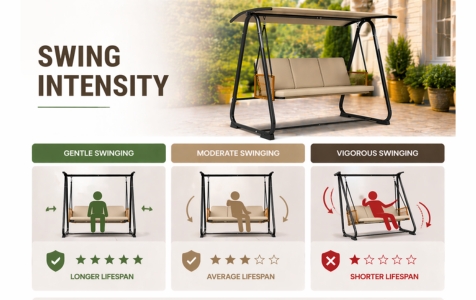
Environmental factors
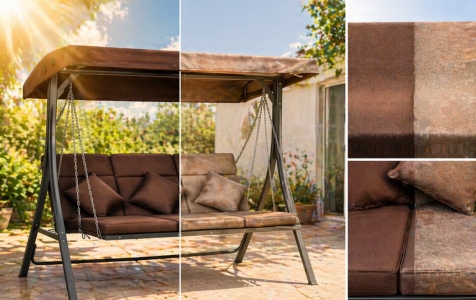

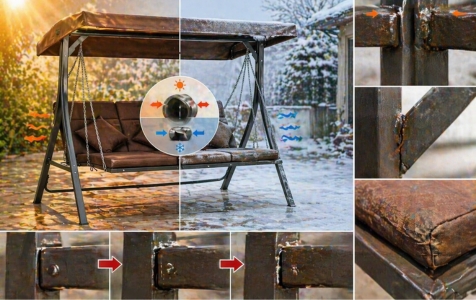
Select your durable swing chair
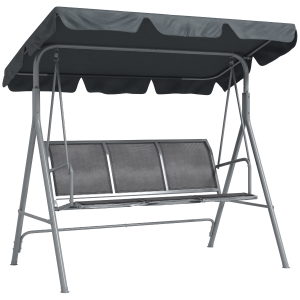

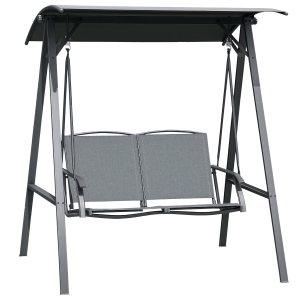
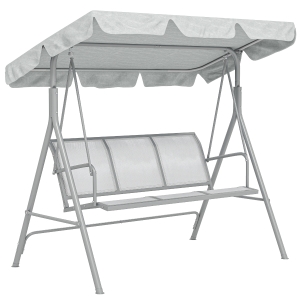
Summary at a glance
- Environmental factors often carry more weight than mere product specifications.
- Even a robust construction can wear out quickly without proper care.
- Even a robust construction can wear out quickly without proper care.
Conclusion: Making your choice with engineering logic
Stop asking these questions:
- How big is the swing?
- How many people can it fit?
Ask these instead:
👉 Suitability
Does it truly fit your available space, your preferred seating position, and your specific usage scenario?
👉 Safety
Will it remain stable under your real-world ground conditions and actual usage patterns?
👉 Durability
Can it withstand your frequency of use and the impact of environmental elements over the long term?
👉 Expectation management
Are you expecting the static stability of a sofa from a dynamic, moving structure?
Final insight
- A swing chair is more than just a piece of furniture; it is a dynamic system that operates under real-world physical conditions.
- Shifting from "static thinking" to a "structural understanding" is the key to avoiding disappointment and making the right investment.
- How big is the swing?
- How many people can it fit?
Ask these instead:
👉 Suitability
Does it truly fit your available space, your preferred seating position, and your specific usage scenario?
👉 Safety
Will it remain stable under your real-world ground conditions and actual usage patterns?
👉 Durability
Can it withstand your frequency of use and the impact of environmental elements over the long term?
👉 Expectation management
Are you expecting the static stability of a sofa from a dynamic, moving structure?
Final insight
- A swing chair is more than just a piece of furniture; it is a dynamic system that operates under real-world physical conditions.
- Shifting from "static thinking" to a "structural understanding" is the key to avoiding disappointment and making the right investment.