


Last Updated: 08/06/2026

Abstract
Smooth operation of cabinets involves multiple factors including doors, drawers, handles, magnetic catches, and cabinet squareness. Uneven door gaps, sticky drawers, or weak magnetic catches do not necessarily indicate a problem; most issues can be resolved through post-installation adjustments, including hinge calibration, drawer slide adjustment, and screw tightening. The Soft-close feature is only present when explicitly specified for a SKU.
Keywords
Cabinet, Doors, Drawers, Handles, Magnetic Catch, Soft-close, Smooth Operation, Hinge Adjustment, Drawer Slide, Installation
Introduction
Cabinets are frequently used storage furniture in daily life, and their smooth operation directly affects the user experience. Properly aligned doors, smoothly operating drawers, secure handles, and correctly functioning magnetic catches are key to comfortable use. Smooth operation reflects product quality and is closely related to installation and fine adjustments.
Key Factors for Effortless Cabinet Use

1. Door Alignment & Even Gaps
Ensuring cabinet doors are properly aligned and gaps are uniform.
... See more

2. Drawer Smoothness
Drawers should open and close effortlessly without sticking.
... See more

3. Magnetic Catch Functionality
Magnetic catches must function correctly to keep doors securely closed.
... See more

4. Handle Stability
Handles should be firmly installed and easy to use.
... See more

5. Soft-close Feature
Cabinets with soft-close mechanisms provide gentle, quiet closing.
... See more

6. Cabinet Squareness
A square and stable cabinet frame ensures overall smooth operation.
... See more
Door Gaps and Hinge Adjustments
Uneven door gaps do not necessarily indicate a cabinet defect. Flat-pack cabinets often require minor hinge adjustments after installation. Hinges are the core components that ensure smooth door operation.
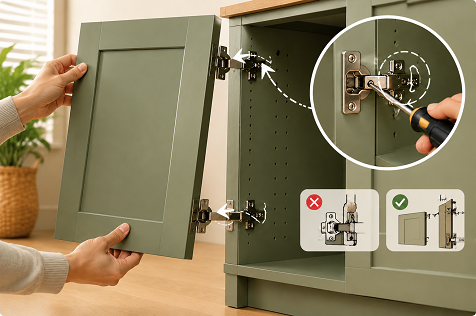
Installation Recommendations 1:Do not fully tighten all screws at once; hang the door first and observe the gaps, then make fine adjustments.
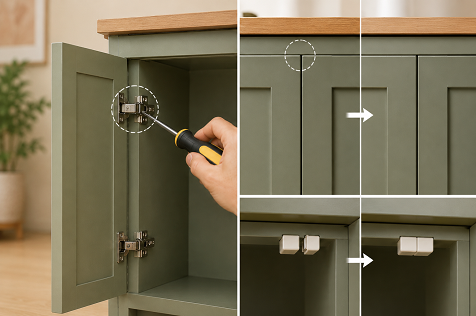
Installation Recommendations 2:Slightly adjust the hinge to align the door with the cabinet, ensuring the magnetic catches engage precisely.
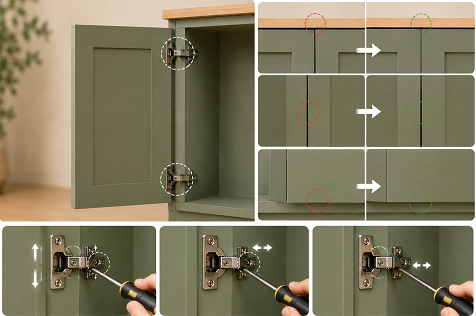
Installation Recommendations 3:Hinges can be adjusted for door height, lateral spacing, and front-to-back alignment to help resolve uneven gaps.
Drawer Smoothness
The smoothness of drawers mainly depends on:
Factor | Impact |
|---|---|
Slide Direction | Incorrect installation will prevent the drawer from sliding properly |
Left-Right Slide Height | Uneven height can cause the drawer to jam |
Screw Position | Misalignment affects smooth movement of the slide |
Screw Tightness | Too tight may press the slide; too loose may cause wobble |
Drawer Alignment | A skewed drawer body leads to uneven sliding |
Drawer Load | Overloading affects slide longevity |
Cabinet Squareness | An out-of-square cabinet affects drawer slides |
Drawer Storage : Best Practices
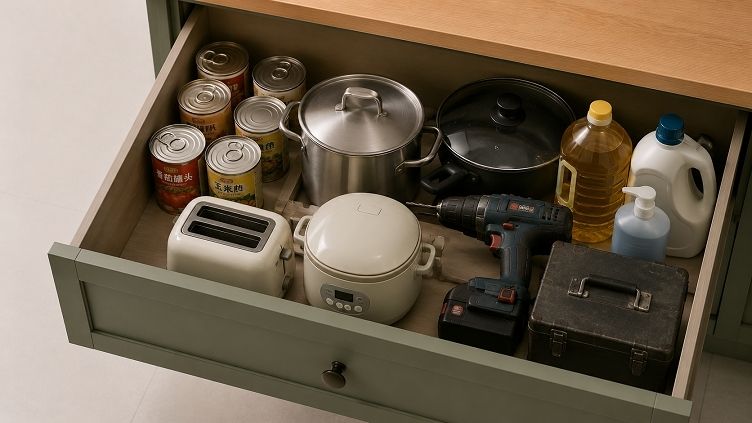

NO

Large quantities of canned goods
Heavy cookware
Large bottles of liquids
Small appliances
Overly heavy tools

Pro Tip
Avoid storing heavy cookware, large bottles, or small appliances in drawers, as excessive weight can reduce drawer lifespan and cause difficulty in sliding.
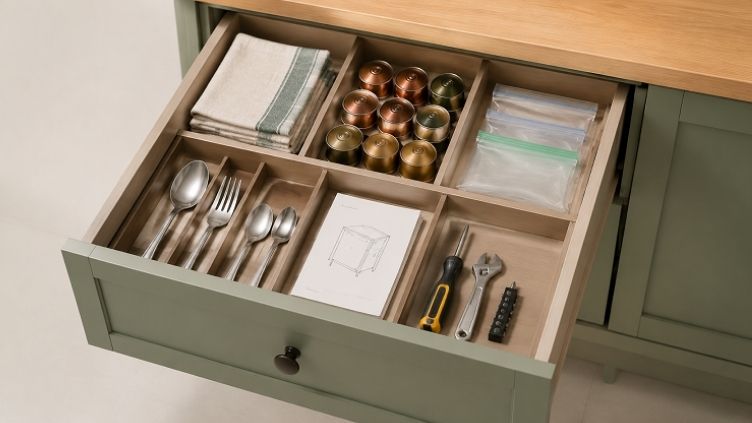

YES

Napkins
Tea towels
Coffee capsules
Plastic storage bags
Manuals

Pro Tip
Organize light and medium items like napkins, tea towels, coffee capsules, and manuals in separate compartments to maintain easy access and smooth drawer operation.
Tips for You
When a drawer is not sliding smoothly, do not immediately assume the product is defective. First, check the slide direction, left-right height, screw tightness, and whether the drawer is overloaded. Proper installation of the slides is key to ensuring smooth drawer operation.
Magnetic Catch Performance
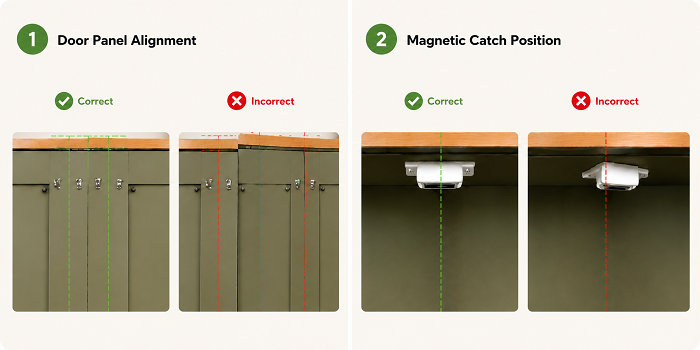
The magnetic catch doesn't work on its own.
It depends on:
1. Whether the door panel is properly aligned
2. Whether the magnetic catch is correctly positioned
2. Whether the magnetic catch is correctly positioned
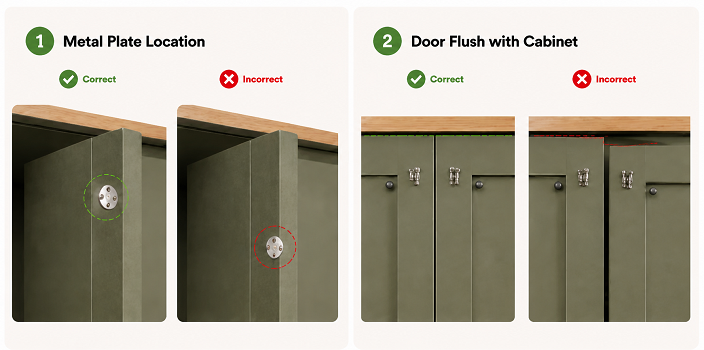
The magnetic catch also depends on:
1. Whether the metal plate is installed in the correct location
2. Whether the door panel is flush with the cabinet
2. Whether the door panel is flush with the cabinet
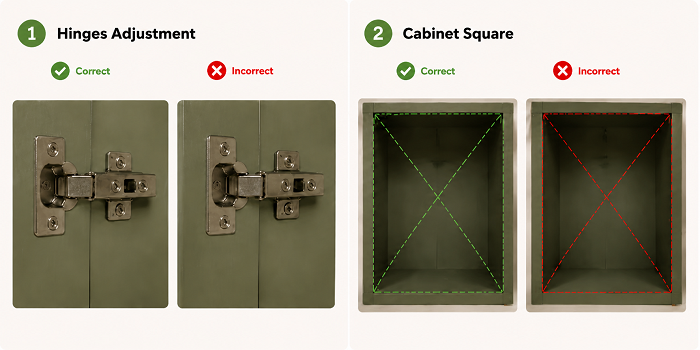
For optimal performance, also check:
1. Whether the hinges are properly adjusted
2. Whether the cabinet is square
2. Whether the cabinet is square
Handle Stability
The stability of handles depends on the hole spacing, screw length, and material.
Dimension | Description |
|---|---|
Hole spacing | When replacing handles, it must match the original hole spacing |
Screw length | Too short will not secure tightly; too long may penetrate thhe pane |
Handle material | Plastic, metal, wood - feel and durability vary |
Points to Confirm Before Replacing Handles
1. Original handle hole spacing
2. Screw specifications
3. Door panel thickness
4. Whether the new handle covers the original holes
5. Whether the new screws are too long
6. Whether the handle weight is suitable for the door panel
Soft-close Feature
Soft-close is not a default configuration and is only available when explicitly specified for a SKU.
Common cabinet door configurations include:
Type | Feature |
|---|---|
Standard Hinge Door | Basic open/close function |
Magnetic Catch Door | Helps closing via magnetic catch |
Soft-close Hinge Door | Provides a cushioning effect when closing |
Dampened Slide Drawer | Drawer closes with a soft damping effect |
Tips for You:
Before purchasing, confirm:
1. Whether the product explicitly states soft-close
2. Whether it is soft-close for cabinet doors or for drawers
3. Whether all doors have it, or only some
4. If not stated, assume standard hinges or standard magnetic catch doors
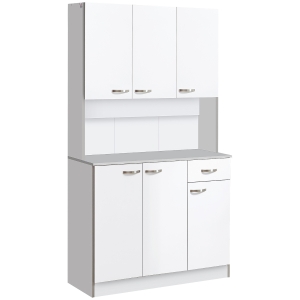
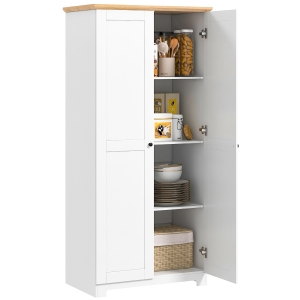
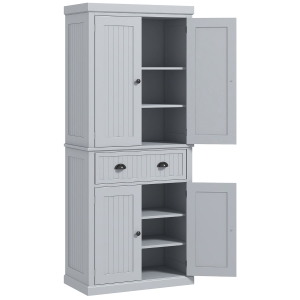
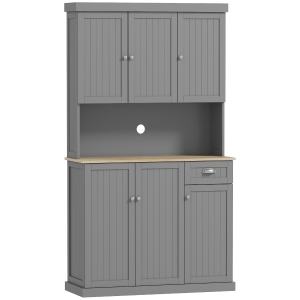
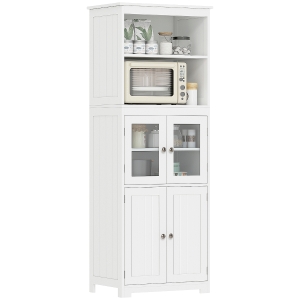
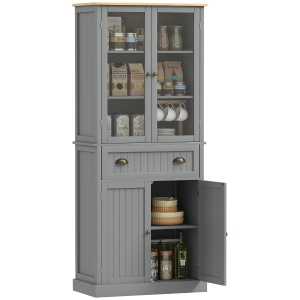
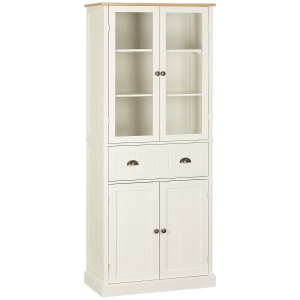
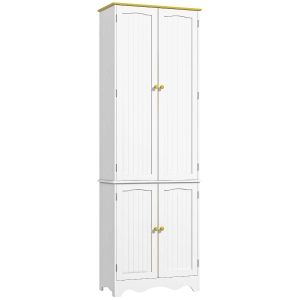
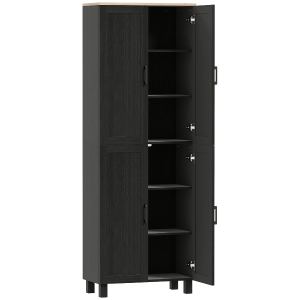
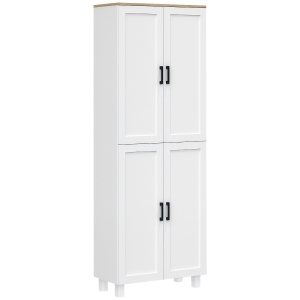
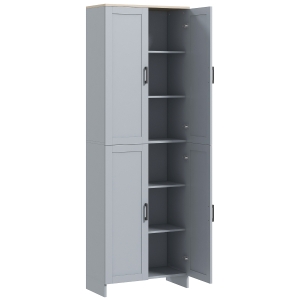
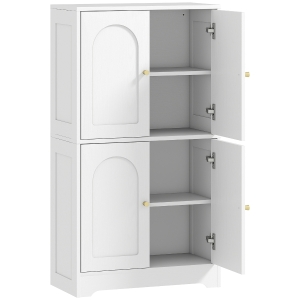
Discover the Perfect Cabinet



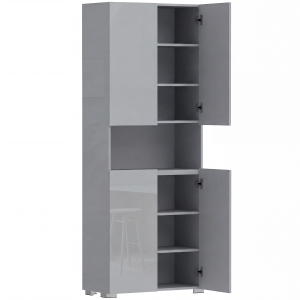
Cabinet Squareness
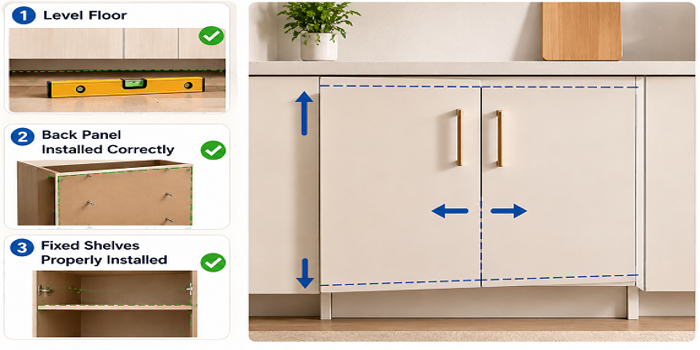
Check the Cabinet Base & Interior
1. Ensure the cabinet is on a level floor.
2. Make sure the back panel is correctly installed.
3. Verify the fixed shelves are properly installed.
2. Make sure the back panel is correctly installed.
3. Verify the fixed shelves are properly installed.
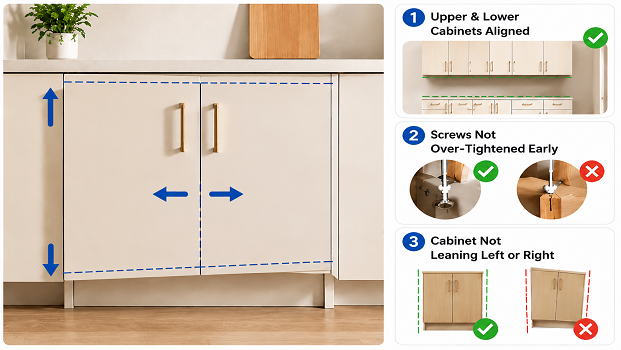
Check Alignment & Installation
1. Aligntheupperandlowercabinets.
2. Avoid tightening screws too early.
3. Ensure the cabinet is not tilted left or right.
2. Avoid tightening screws too early.
3. Ensure the cabinet is not tilted left or right.
Assembly Do's and Don'ts
How to Handle Issues Safely During Cabinet Installation to Avoid Damage and Ensure Proper Setup
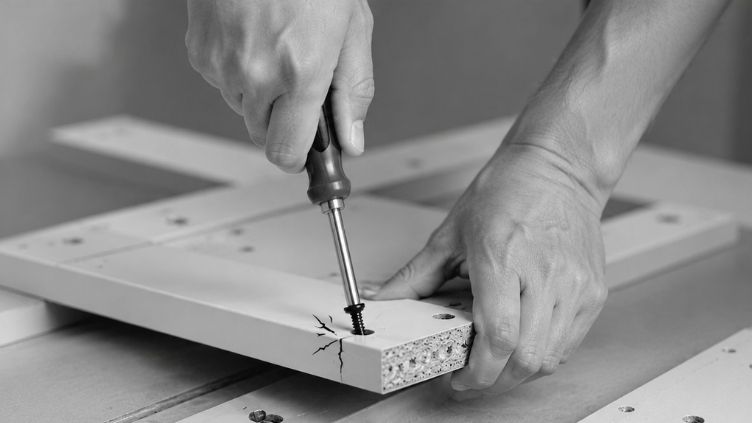

NO
Do not force it or continue installing
May cause damage to parts or panels
Can lead to larger assembly problems
Pro Tip
Forcing parts together can cause irreparable damage and compromise the structure.


YES
Stopforcing or over-tightening
Take photos of the problem area
Check the manual and confirm the part number
Verify whether the part is installed backwards or incorrectly
If the part is defective or incorrect, contact customer service
Pro Tip
Taking a moment to check can save time and prevent unnecessary damage.
Conclusion
Smooth cabinet operation depends on proper overall installation and fine adjustments, including hinges, doors, drawers, handles, magnetic catches, and cabinet squareness. Uneven doors, sticky drawers, or weak magnetic catches do not necessarily indicate a quality problem; in most cases, these issues can be improved through post-installation adjustments.
References
1. The Cabinetmaker’s Handbook, 4th Edition, Professional Furniture Institute UK, 2021
2. Furniture Fit & Finish: Standards and Techniques, British Home Environment Press, 2019
3. Modern Joinery and Cabinet Fitting, edited by Sarah Whitfield, 2020
4. Furniture Ergonomics and User Experience, London Design Research Collective, 2022
5. Practical Woodworking: Doors, Drawers and Hardware, Oxford Woodworking Series, 2018
6. British Standards for Furniture and Joinery (BS EN 14749), British Standards Institution, 2016
7. The Complete Guide to Cabinet Hardware, National Hardware Federation UK, 2020
8. Kitchen Cabinet Installation Manual, UK Home Builders Journal, 2021
9. The International Handbook of Furniture Design & Technology, Routledge, 2023
10. Furniture Assembly & Adjustment Techniques, Furniture Engineering Today, 2019 (journal article)
2. Furniture Fit & Finish: Standards and Techniques, British Home Environment Press, 2019
3. Modern Joinery and Cabinet Fitting, edited by Sarah Whitfield, 2020
4. Furniture Ergonomics and User Experience, London Design Research Collective, 2022
5. Practical Woodworking: Doors, Drawers and Hardware, Oxford Woodworking Series, 2018
6. British Standards for Furniture and Joinery (BS EN 14749), British Standards Institution, 2016
7. The Complete Guide to Cabinet Hardware, National Hardware Federation UK, 2020
8. Kitchen Cabinet Installation Manual, UK Home Builders Journal, 2021
9. The International Handbook of Furniture Design & Technology, Routledge, 2023
10. Furniture Assembly & Adjustment Techniques, Furniture Engineering Today, 2019 (journal article)
Alastair Bennett
Alastair Bennett is a furniture consultant and writer with over 12 years’ experience in residential cabinetry, furniture hardware and usability studies. He specialises in translating technical assembly and hardware insights into practical explanations that are easy for consumers to understand.