


Last Updated: 30/07/2026
Introduction
Flat-pack cabinets promise “easy assembly,” but real-world user experiences reveal that assembly difficulty depends on multiple factors beyond just instructions. Proper understanding of component organization, hardware labeling, and sequential assembly is crucial for a smooth process. This article breaks down the key aspects influencing cabinet assembly, helping users set realistic expectations and avoid common pitfalls.
Keywords
Cabinet assembly, Tall Cupboards, Sideboards, Flat-pack furniture, Self-assembly cabinets, Furniture installation tips
What “Easy Assembly” Really Means

Easy Assembly ≠ Quick Build
Core Issue
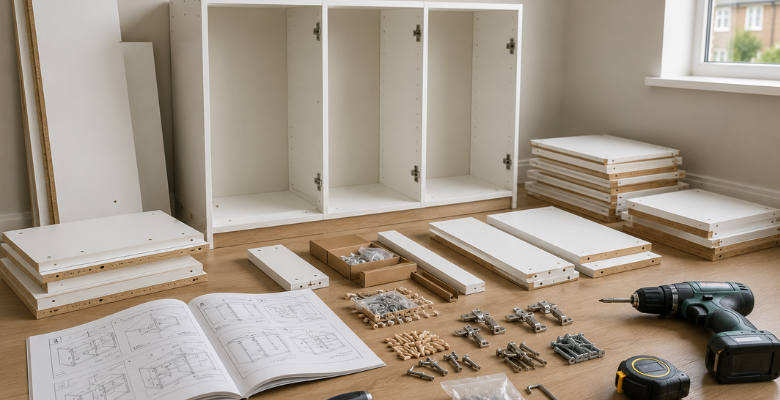
Users often assume that "easy assembly" means the cabinet can be quickly built. In reality, assembling a cabinet requires patience and following the steps carefully.
Knowledge points
Cabinets are flat-pack / self-assembly furniture. The steps are clear, parts are fully numbered, and the instructions are operable, but this does not mean there are few parts, that a single person can assemble it, that it can be done in 30 minutes, or that no tools are required.
Users often assume that "easy assembly" means the cabinet can be quickly built. In reality, assembling a cabinet requires patience and following the steps carefully.
Knowledge points
Cabinets are flat-pack / self-assembly furniture. The steps are clear, parts are fully numbered, and the instructions are operable, but this does not mean there are few parts, that a single person can assemble it, that it can be done in 30 minutes, or that no tools are required.
Assembly Time Reference
Cabinet Types | Recommended Number of Participants | Typical Assembly Time |
|---|---|---|
Small Side Cabinet / Low Cabinet | One person | 0.5–1 hour |
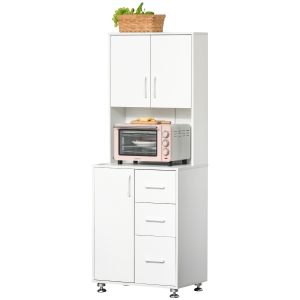
Medium Sideboard / Microwave Cabinet | One - Two person | 1–1.5 hours |
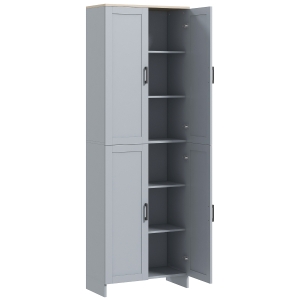
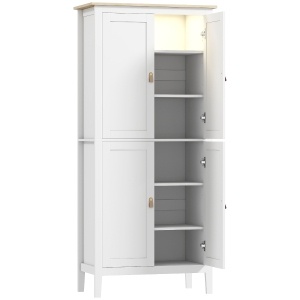
Tall Cabinet / Pantry Cabinet | Two person | 1–2 hours |
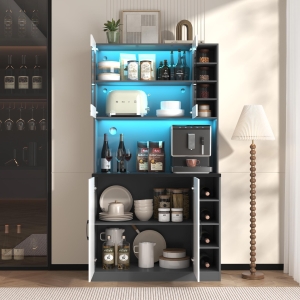
Complex Cabinet with Drawers, Glass Doors, and LED Strip Lighting | Two person | 1–2 hours |
"Easy Assembly" does not equate to "quick completion."
Cabinet assembly requires users to follow step-by-step instructions, inventory the panels and hardware, and set aside sufficient time. Properly understanding the concept of "Easy Assembly" helps users prepare effectively, thereby avoiding the frustration that can arise from unrealistic expectations or improper execution.
Why Cabinets Are Harder to Assemble Than Small Furniture
Core Issue
Many users wonder why a single cabinet comes with so many panels, screws, and steps. Unlike simple tables or shelves, cabinets have complex structural and functional components that require careful assembly.
Most common tricky steps
· Back Panel – Though thin, it affects overall cabinet squareness. Improper installation may misalign doors.
· Doors – Doors rarely align perfectly upon installation. Hinges usually require final adjustment (up/down, left/right, front/back).
· Drawers – Drawer installation is sensitive to rail orientation and spacing. Misaligned rails can cause drawers to jam or not close properly.
· Upper & Lower Cabinet Combination – Some pantry cabinets come in two parts. Lifting and balancing the upper part alone can be risky and may damage panels.
Many users wonder why a single cabinet comes with so many panels, screws, and steps. Unlike simple tables or shelves, cabinets have complex structural and functional components that require careful assembly.
Most common tricky steps
· Back Panel – Though thin, it affects overall cabinet squareness. Improper installation may misalign doors.
· Doors – Doors rarely align perfectly upon installation. Hinges usually require final adjustment (up/down, left/right, front/back).
· Drawers – Drawer installation is sensitive to rail orientation and spacing. Misaligned rails can cause drawers to jam or not close properly.
· Upper & Lower Cabinet Combination – Some pantry cabinets come in two parts. Lifting and balancing the upper part alone can be risky and may damage panels.
Key assembly challenges
The main difficulties in cabinet assembly come from these areas:
Challenge | Why It's Difficult |
|---|---|
Numerous Panels | Tall cabinets and sideboards typically consist of a multitude of components: side panels, top panels, bottom panels, shelves, back panels, door panels, and drawer panels. |
Abundant Hardware | A wide array of hardware—including screws, wooden dowels, eccentric cams, hinges, drawer slides, magnetic catches, and handles—must all be installed in their precise, corresponding locations. |
Back Panel Installation | The back panel dictates the squareness of the cabinet frame; if installed askew, it compromises the overall structural stability. |
Door Panel Installation | Hinges must be precisely aligned with their designated mounting holes, and the gaps between the doors require fine-tuning during the final adjustment stage. |
Drawer Installation | The orientation of the drawer slides, the left-to-right parallelism, and the exact placement of screws all directly impact the smoothness of the drawer's operation. |
Upper & Lower Cabinet Assembly | The upper section of the cabinet must be lifted and positioned atop the lower section; this task typically requires two people to perform safely. |
Multi-Box Delivery | Large cabinets may be shipped in two or three separate boxes; if the complete set of boxes has not yet arrived, the unit cannot be fully assembled. |
Pre-Assembly Checklist: Avoid Midway Surprises
Core Issue
Many negative reviews aren’t about the start of assembly—they arise mid-way when users discover missing panels, screws, misaligned holes, or damaged pieces. At this point, the problem is magnified because:
· The cabinet is partially assembled
· Packaging may have been discarded
· Returns or replacements become harder
· User time is lost
· Frustration increases
Key Knowledge
Before screwing anything, the most important step is to check all parts. For multi-panel cabinets, following a pre-assembly checklist helps prevent mid-assembly stops due to:
· Missing components
· Missing screws
· Only part of the delivery arrived
· Misaligned holes
Suggested Checklist
· Open all boxes
· Check all panels against the instruction list
· Lay out panels by number
· Organize hardware by label or number
· Inspect main panels for damage
Screw Tightening: Step-by-Step, Not All at Once
Core Issue
A common habit is to fully tighten screws after each assembly step. While acceptable for small furniture, this can cause problems for cabinets:
· Holes may not align
· Back panels may be difficult to fit
· Cabinet may be out of square
· Doors misaligned
· Drawers uneven or stuck
· Upper and lower units hard to combine
Key Knowledge
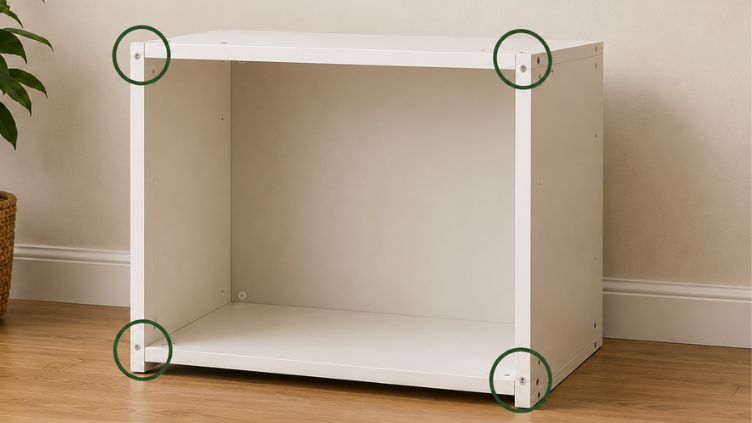
Cabinet assembly requires a gradual approach. Screws should be lightly positioned first, then adjustments made, and finally fully tightened to allow for fine-tuning of panels and alignment.

DO THIS

Panels can be adjusted
Back panel fits easily
Cabinet stays square
Doors and drawers align well

Pro Tip
Lightly tighten first, then adjust and tighten at the end.

DON'T DO THIS

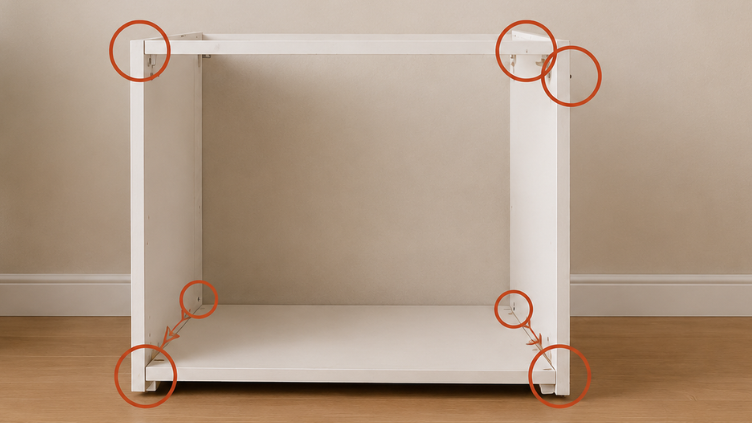
Holes don't line up
Back panel won't fit
Doors won't align
Drawer slides not level
Pro Tip
Tightening too early can cause many problems.
Can I Use a Power Screwdriver?
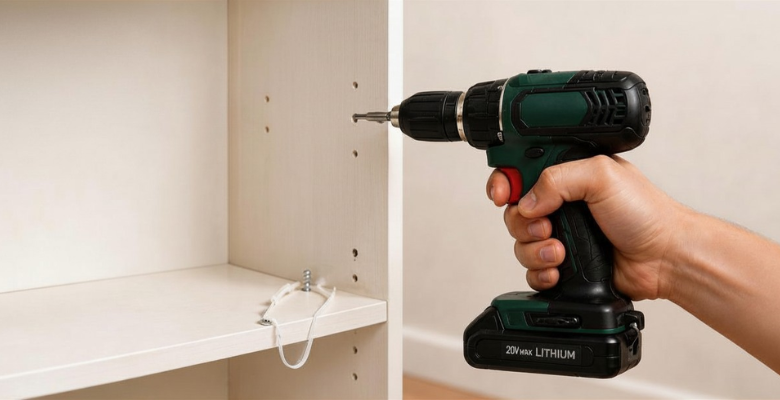
Yes,youcan.But please keep these points in mind:
· Use low speed
High speed can damage the board or screws.
· Don't force it
If you feel resistance,stop and check
· Don't overtighten
Overtightening can strip the screw hole.
· Final check with a manual screwdriver
Hand-tightening ensures better control.
· Check screw type and hole position
If it doesn't fit,double-check before proceeding.
Power tools can improve efficiency, but correct technique is the key to a successful assembly.
· Use low speed
High speed can damage the board or screws.
· Don't force it
If you feel resistance,stop and check
· Don't overtighten
Overtightening can strip the screw hole.
· Final check with a manual screwdriver
Hand-tightening ensures better control.
· Check screw type and hole position
If it doesn't fit,double-check before proceeding.
Power tools can improve efficiency, but correct technique is the key to a successful assembly.
Door and Drawer Adjustment Is Normal
Common Issues
- Misaligned doors
- Uneven drawer gaps
- Handle loose
Professional Insight
- Cabinet doors and drawers often need final adjustment after assembly.
- Hinges allow micro-adjustments: vertical, horizontal, depth.
- Drawers may need slight alignment to rails; screws should be checked.
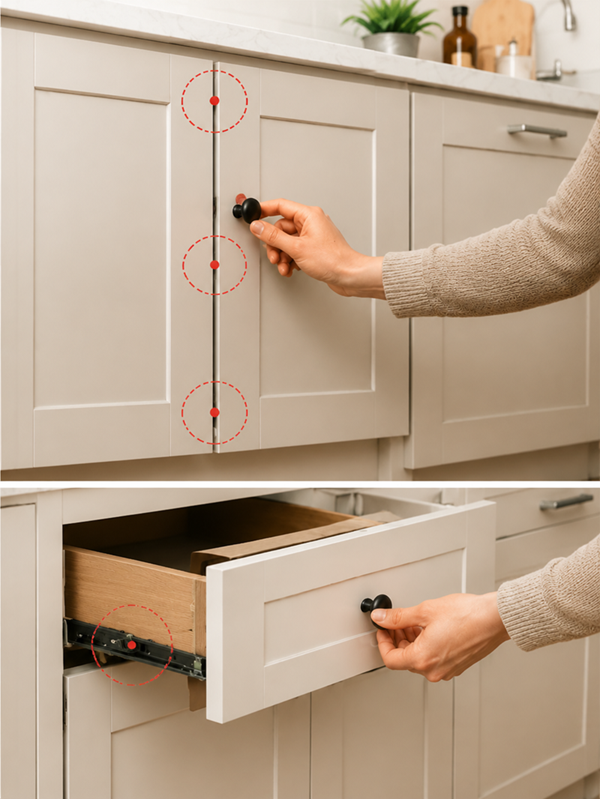

BEFORE ADJUSTMENT

Doors not aligned
• One door higher
• Uneven gaps
• Door won't close properly
• Magnet doesn't catch
• One door higher
• Uneven gaps
• Door won't close properly
• Magnet doesn't catch
Drawer sticks or won't close smoothly
• Drawer hard to push in
• Drawer won't close
• Handle feels loose
• Drawer hard to push in
• Drawer won't close
• Handle feels loose
Why this happens
Doors and drawers often need final adjustments. It doesn't mean the cabinet is faulty.
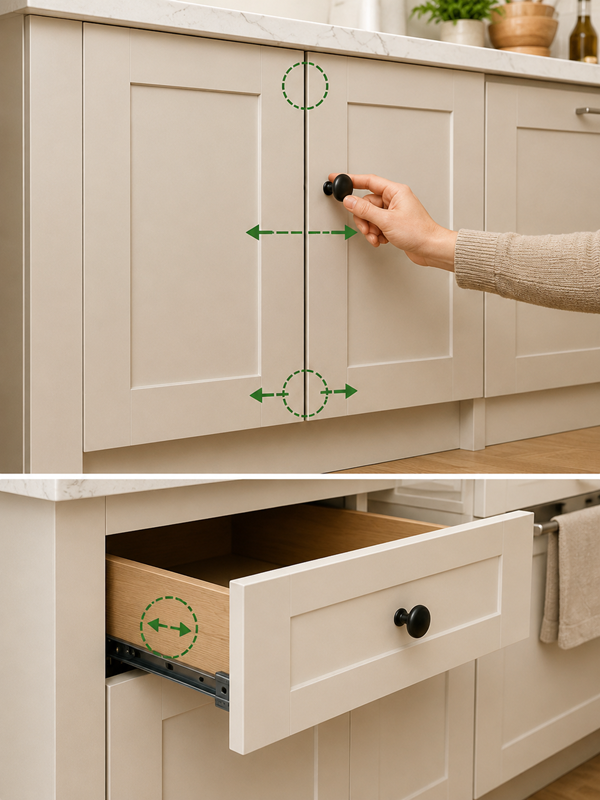

AFTER ADJUSTMENT
Doors aligned and closing properly
• Even door height
• Consistent gaps
• Door closes flush
• Magnet catches
• Even door height
• Consistent gaps
• Door closes flush
• Magnet catches
Drawer slides smoothly
• Easy to push in
• Closes fully
• Handle is secure
• Easy to push in
• Closes fully
• Handle is secure
Quick tips
Check hinge position and adjust gaps using the screws. Ensure slides are installed in the correct direction and at the same height.
Why Large Cabinets Are Best Assembled by Two People
Some steps are simply easier - and safer - with an extra pair of hands.
It's not just about saving effort. It helps prevent damage, keeps everything aligned and makes the whole process safer and smoother.
It's not just about saving effort. It helps prevent damage, keeps everything aligned and makes the whole process safer and smoother.
Trying to do it alone may lead to:
· Damaged edges and corners
· Top cabinets unstable
· Doors slipping or falling
· Cabinet not square overall
· Screw holes shifting under pressure
· Back panels difficult to fit
· Top cabinets unstable
· Doors slipping or falling
· Cabinet not square overall
· Screw holes shifting under pressure
· Back panels difficult to fit
Steps That Are Best Done by Two People
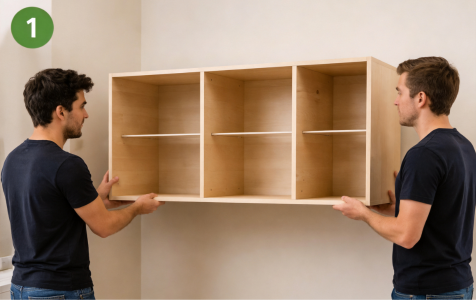
Lifting and placing the upper cabinetUpper cabinets are heavy and awkward to handle on your own.
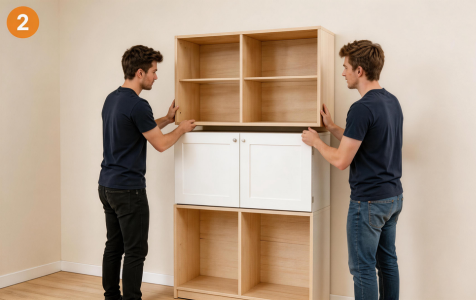
Combining upper and lower cabinetsTwo people help keep the cabinets aligned and secure during assembly.
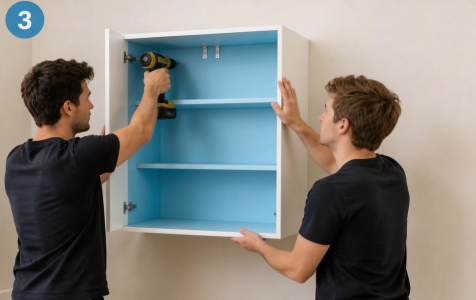
Installing back panelsHolding the cabinet steady while the back panel is positioned and secured.
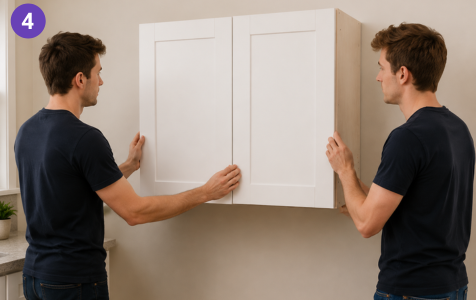
Fitting large doorsLarge doors are difficult to hold and adjust alone without risking damage.
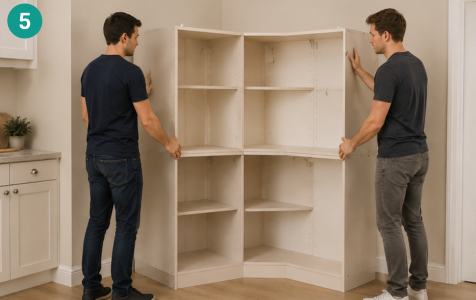
Moving and adjusting the cabinetEasier to move into place and adjust position together.
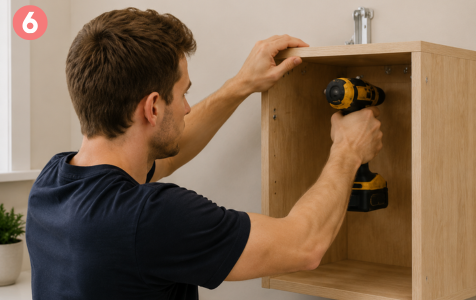
Securing anti-tip brackets to the wallOne holds the cabinet in place while the other attaches the bracket.
Split Delivery Requires Planning
Large cabinets often arrive in multiple boxes due to size and weight. Users may encounter:
- Only receiving one box initially
- Second box arriving later
- Instruction manual in a separate box
- Hardware pack in another box
- Mistakenly thinking items are missing
- Unable to assemble after opening just one box
Split delivery is normal for large cabinets but requires advance awareness:
- Boxes may be labeled Box 1/2 and Box 2/2
- Boxes can arrive at different times
- Panels and hardware may be in separate boxes
- Do not start assembly without all boxes
- Instruction sheets may be split across boxes

User Guidance: Handling Multi-Box Cabinet Deliveries
Check Box Numbers: Verify the number of each box upon delivery to ensure they match your order.
Confirm Complete Delivery: Make sure all boxes have arrived before starting assembly.
Avoid Assuming Missing Parts: Do not assume parts are missing if only some boxes have been delivered.
Address Delayed Shipments: If boxes arrive at different times, contact customer service to confirm delivery status.
Keep Packaging: Retain all packaging until you have verified that all parts are present and undamaged.
Discover more





Final Check After Assembly
Core Issue:
Many users assume that assembly is finished once the last screw is tightened. In reality, a proper final check is essential to confirm cabinet stability and functionality before full use.
Key Takeaway:
A completed cabinet is more than assembled fasteners—it requires verification of structural alignment, door and drawer operation, and secure installation to ensure safety and longevity.
Checklist
Inspection Item | Purpose |
|---|---|
Are all screws tightened? | Prevent loosening over time |
Is the back panel secured? | Maintain cabinet squareness |
Are the fixed shelves installed? | Ensure structural stability |
Are the doors aligned? | Guarantee smooth opening and closing |
Do drawers slide smoothly? | Avoid jamming or damage |
Are the handles secure? | Prevent loosening during use |
Is the magnetic catch aligned? | Ensure doors close properly |
Is the cabinet stable? | Determine if adjustment or anchoring is needed |
Are anti-tip brackets installed? | Enhance safety for tall cabinets |
After completing assembly, we recommend the following steps:
· Check the cabinet’s stability while it is still empty.
· Test with a small number of items first.
· Place heavier items on the lower shelves initially.
· Adjust doors and drawers as needed for smooth operation.
· For tall cabinets, secure them to the wall before fully loading.
· After one week of use, recheck screws and hinges for any loosening.
· Test with a small number of items first.
· Place heavier items on the lower shelves initially.
· Adjust doors and drawers as needed for smooth operation.
· For tall cabinets, secure them to the wall before fully loading.
· After one week of use, recheck screws and hinges for any loosening.
This ensures safe use and prolongs the life and functionality of the cabinet.
Conclusion
Assembly Insights: What Really Matters
The true ease of cabinet assembly is not about speed, but about understanding the process. Flat-pack furniture requires careful organization, checking all parts, and sequential assembly. Patience, proper tools and, for large units, teamwork, are key. Door and drawer alignment is a normal final adjustment and does not indicate defects. By following best practices, users can reduce frustration, prevent damage, and ensure long-term cabinet stability.
References
1. British Standards Institution (2018). BS EN 14749:2016 Furniture – Storage units – Safety requirements. London: BSI.
2. Royal Institution of Chartered Surveyors (RICS) (2016). RICS Building Surveying Standards. London: RICS.
3. Lloyd, G., & Stewart, M. (2017). The Effect of Foundations on the 4. Performance of Domestic Storage Furniture. Journal of Civil Engineering and Construction Technology, 8(2), 29-36.
4. British Furniture Manufacturers Association (BFM) (2020). Guide to Flat-Pack Furniture Assembly & Safety. London: BFM.
5. National House-Building Council (NHBC) (2017). Technical Standards: Sitework and Furniture Installation. Milton Keynes: NHBC.
6. The Building Research Establishment (BRE) (2015). Performance and Durability of Household Storage Units. Watford: BRE.
7. Department for Business, Energy & Industrial Strategy (BEIS) (2019). 8. Consumer Safety Guidance for Furniture and Storage Units. London: BEIS.
Hall, M. R., & Djerbib, Y. (2004). Moisture and Load Impacts on Domestic Furniture. Construction and Building Materials, 18(5), 377-385.
Author
Dr. Oliver Grant