


Last Updated: 30/07/2026
1. Introduction
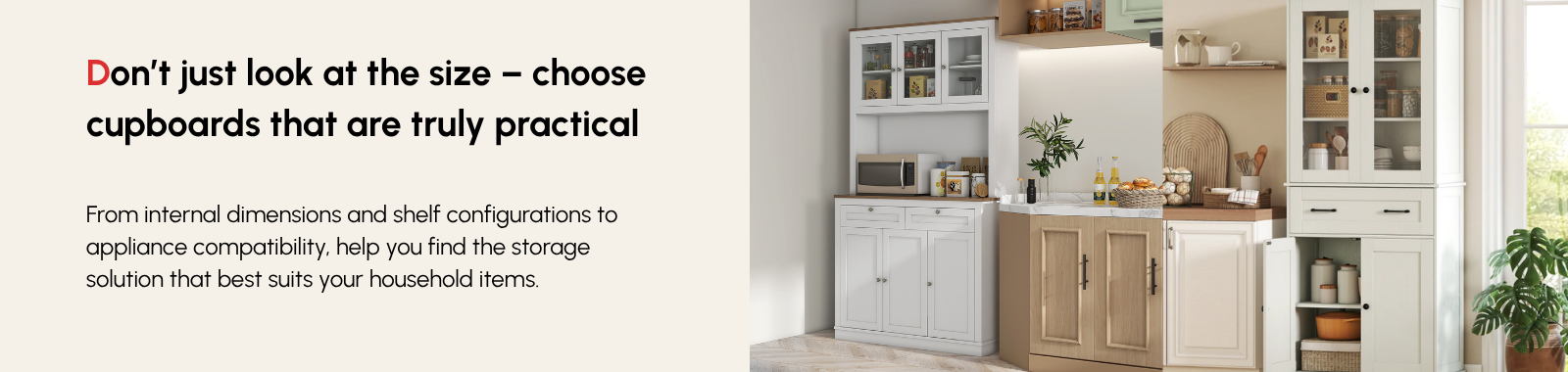
Cabinets are more than storage—they are a tool to keep your countertops tidy, organize miscellaneous items, and make your home more functional.
Many buyers focus on the cabinet’s size or exterior appearance, but overlook usable internal space, drawer depth, open compartment dimensions, and appliance compatibility. To ensure the cabinet meets your real storage needs, consider the following:
Many buyers focus on the cabinet’s size or exterior appearance, but overlook usable internal space, drawer depth, open compartment dimensions, and appliance compatibility. To ensure the cabinet meets your real storage needs, consider the following:
Focusing on these aspects will help you avoid purchasing a cabinet that looks spacious but does not fulfill practical needs.
Key words
cabinet storage ; kitchen organization; storage capacity; drawer dimensions; adjustable shelves; appliance compatibility; small space solutions
Can small appliances fit properly and be used conveniently?
... See more
Are food, cookware, and utensils stored in practical locations?
... See more

Do drawers and open compartments meet daily access requirements?
... See more

Can compact spaces remain tidy without feeling cluttered?
... See more
2. Focus on Usable Dimensions
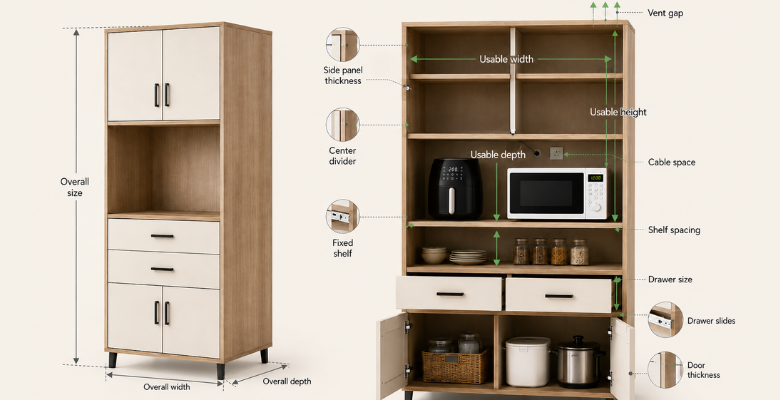

Overall cabinet dimensions are only a reference. True storage capacity depends on the usable space within each compartment, including internal width, depth, height, and shelf spacing. Even a seemingly spacious cabinet may fail to accommodate common appliances or items if internal dividers are poorly designed.
Key points to check:
- Usable space taken up by internal shelves and dividers
- Drawer rails and door structures affecting depth
- Appliance ventilation and cable access
- Open compartment dimensions suitable for daily items
3. Different Items Need Different Storage
Before buying, measure your items’ width, depth, height, and cable positions, and compare them with the cabinet’s internal compartments.
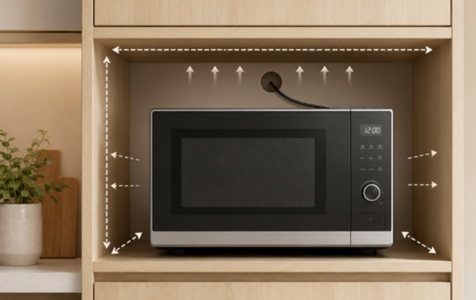
Microwave: Check open compartment width, depth, height, and cable access to ensure sufficient operational space
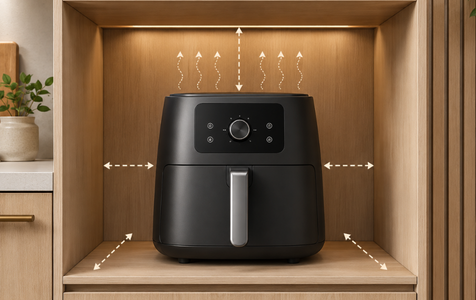
Air Fryer: Focus on depth, height, and ventilation to avoid limitations during use
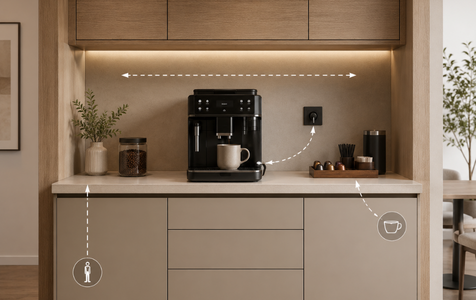
Coffee Machine: Countertop height, operational space, power source, and placement of nearby small items
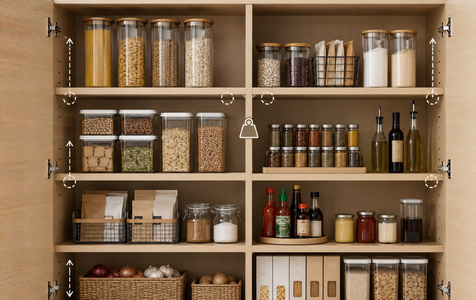
Food/Condiments: Shelf height, weight capacity, and adjustability to allow organized storage
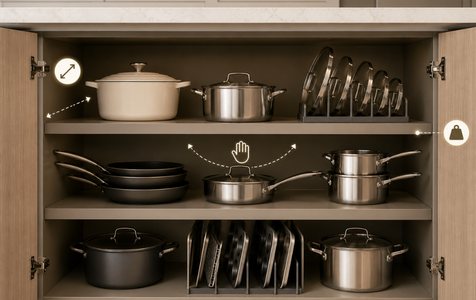
Cookware: Depth, shelf strength, and ease of access
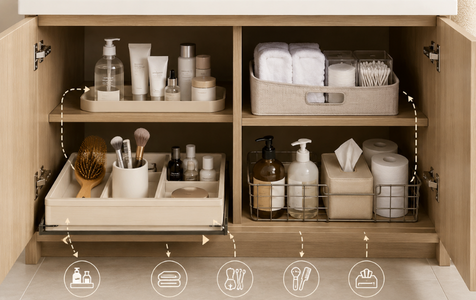
Small Items/Bathroom Supplies: Shelf spacing, drawer dimensions, and ventilation for convenient daily use
4. Layered Storage for Better Organization
Storage isn’t just about filling up—it’s about organizing smartly. Adopt a layered management principle:
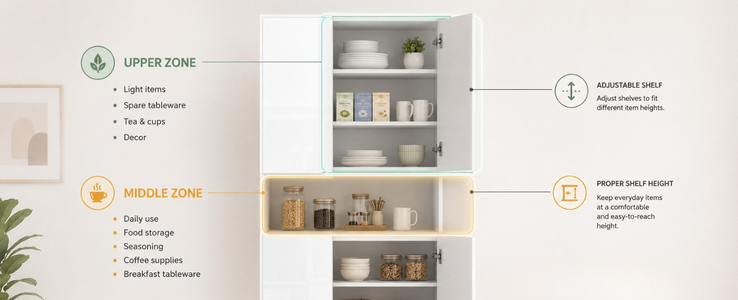
Upper & Middle Shelves
The upper and middle shelves are ideal for light and frequently
-
Usage Tips:
- Store infrequently used lightweight items on the top layer to minimize stretching
- Place daily-use items in the middle layer for easy access
- Adjustable shelves allow middle layer height to accommodate different items
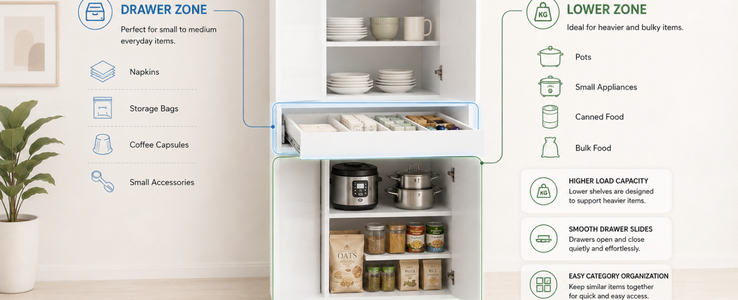
Lower Shelves & Drawers
The lower shelves and drawers are designed to hold heavy and small items for organized storage:
-
Usage Tips:
- Place heavy items on lower shelves for easier access and even weight distribution
- Use drawers for small items to prevent clutter
- Check internal drawer dimensions to ensure items fit and are easy to retrieve
Principles of storage
Guidelines | 📌 Notes |
|---|---|
Place frequently used items on the middle shelf | Easiest to reach |
Place heavy items on the bottom shelf | Improves stability |
Place light items on the top shelf | Reduces the risk of the unit tipping forward |
Store small items in drawers | Prevents clutter |
Place electrical appliances on the worktop | For ease of use and heat dissipation |
Place tall bottles on adjustable shelves | Avoids wasting space |
Organise food by category | Makes it easier to find what you need |
5. Drawers & Shelves: Check the Real Fit
Focus on adjustability, weight capacity, and internal dimensions.
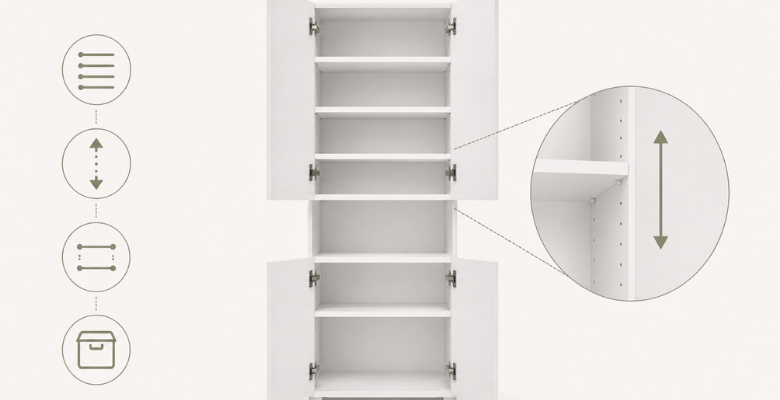
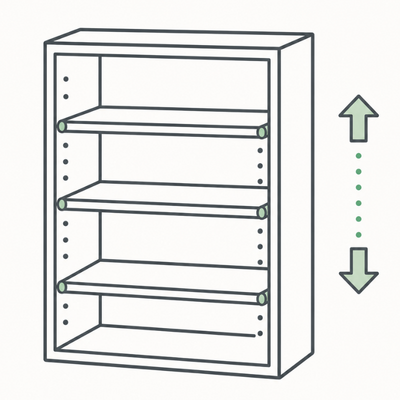
Shelves: Number & Adjustability

The number of shelves does not automatically mean flexible storage. Before buying, focus on:


Usage Tips:
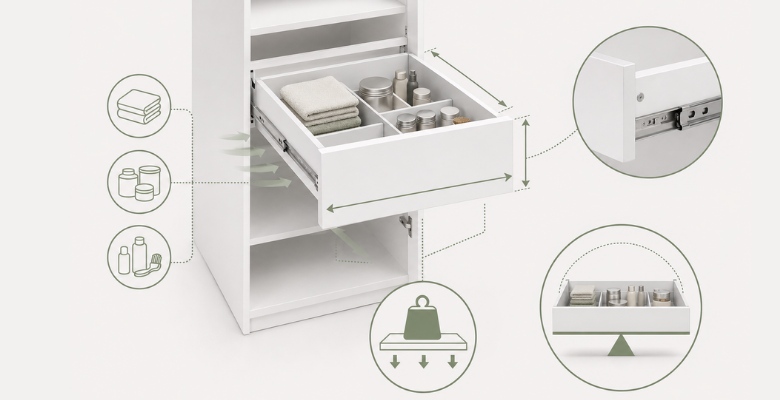
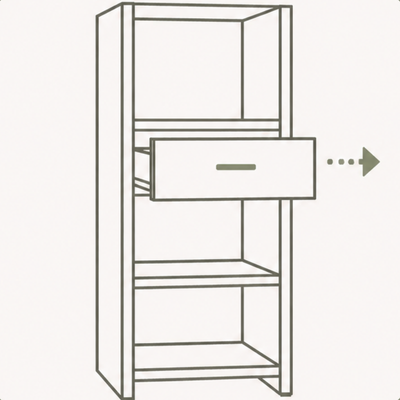
Drawers: Dimensions & Weight Capacity
More drawers do not necessarily mean better storage. Focus on internal dimensions and weight capacity:
Usage Tips:
6. Pre-Purchase Checklist

1. Measure Your Space:
Check width, depth, height, door swing, aisle width, and outlet location
... See more

2. Measure Items to Store:
Microwave, air fryer, coffee machine, cookware, food items, towels, etc.
... See more

3. Confirm Internal Dimensions:
Open compartments, drawers, shelf height, weight capacity, and cable access to ensure smooth usage
... See more
Discover more cabinets



7. Conclusion
Kitchen cabinets aren’t necessarily better the larger they are; rather, the better they are, the more suited they are to your belongings. True storage capacity comes from the right dimensions, sensible zoning and proper organisation.
References
1. Chahal, P., & Mehta, M. (2021). Ergonomic assessment of storage shelves of standing kitchen in rural Haryana. International Journal of Scientific Research in Engineering and Management, 5(07).
2. Hrovatin, J., Silvana, P., Oblak, L., & Ravnik, D. (2015). Ergonomic suitability of kitchen furniture regarding height accessibility. Collegium Antropologicum, 39(1), 185–191.
3. Gao, Y., Chen, Y., Olarescu, A., & Liu, X. (2025). Optimizing built-in refrigerator integration: BEHAVIOR model for evaluating kitchen workflow and spatial adaptability. Buildings, 15(21), 3829.
4. Wang, Y., Lin, D., & Huang, Z. (2022). Research on the aging‑friendly kitchen based on space syntax theory. International Journal of Environmental Research and Public Health, 19(9), 5393.
5. Parrott, K., Beamish, J., & Emmel, J. (2005). Rethinking guidelines for kitchen storage. Housing and Society, 32(2), 43‑61.
2. Hrovatin, J., Silvana, P., Oblak, L., & Ravnik, D. (2015). Ergonomic suitability of kitchen furniture regarding height accessibility. Collegium Antropologicum, 39(1), 185–191.
3. Gao, Y., Chen, Y., Olarescu, A., & Liu, X. (2025). Optimizing built-in refrigerator integration: BEHAVIOR model for evaluating kitchen workflow and spatial adaptability. Buildings, 15(21), 3829.
4. Wang, Y., Lin, D., & Huang, Z. (2022). Research on the aging‑friendly kitchen based on space syntax theory. International Journal of Environmental Research and Public Health, 19(9), 5393.
5. Parrott, K., Beamish, J., & Emmel, J. (2005). Rethinking guidelines for kitchen storage. Housing and Society, 32(2), 43‑61.