AOSOM PET STORIES
A LITTLE HOME, A WORLD TO EXPLORE
At Aosom, we believe every pet deserves a comfortable place to call home. Discover thoughtfully designed hamster habitats that bring together space to explore, cosy corners to nest and practical features for everyday care.

WHAT COULD YOUR HAMSTER'S HOME BE MISSING?
A few thoughtful changes can make a difference to your hamster's everyday environment. Start with the essentials.
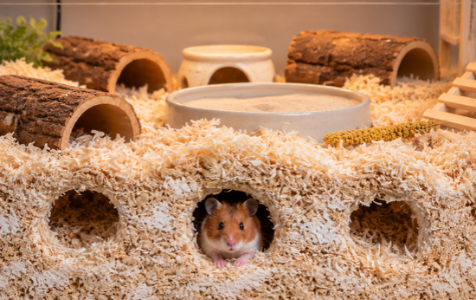
ROOM TO BURROWSuitable bedding and space to dig.
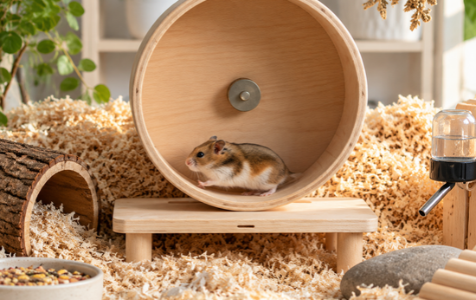
PLACES TO EXPLOREHides, enrichment and activity areas.
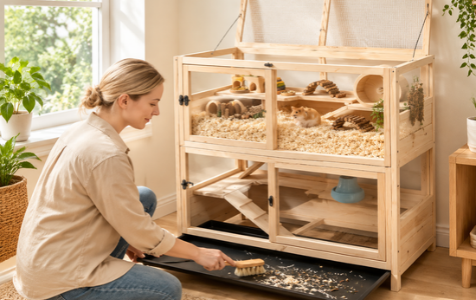
EASIER EVERYDAY CAREPractical access for routine maintenance.
FIND YOUR HAMSTER'S NEXT HOME
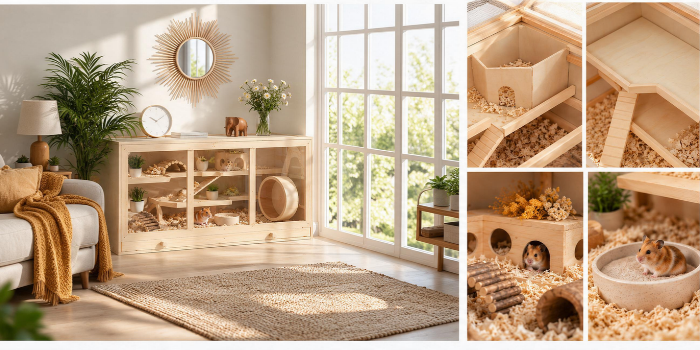
THE SPACE UPGRADE
A LITTLE MORE ROOM FOR A LOT MORE EXPLORATION
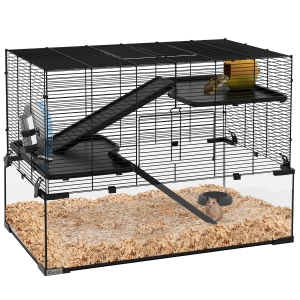
Make better use of every corner with dedicated spaces for digging, playing, hiding and resting. Create a more engaging habitat that supports your hamster's natural behaviours.
Make better use of every corner with dedicated spaces for digging, playing, hiding and resting. Create a more engaging habitat that supports your hamster's natural behaviours.
THE EVERYDAY UPGRADE
LESS FUSS, MORE TIME WITH YOUR HAMSTER
From easy top access to a removable base tray, thoughtful features make everyday feeding, tidying and cleaning more convenient.
From easy top access to a removable base tray, thoughtful features make everyday feeding, tidying and cleaning more convenient.
THE SEE-IT-ALL UPGRADE
SEE MORE OF THEIR LITTLE WORLD
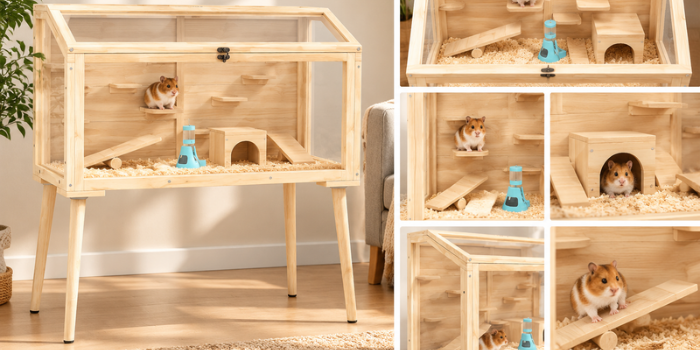
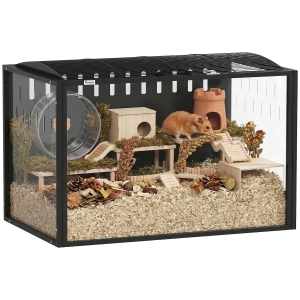
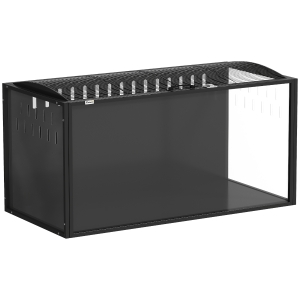
The transparent front panel offers a clearer view of your hamster's everyday adventures, from exploring their surroundings to finding a cosy spot to rest.
The transparent front panel offers a clearer view of your hamster's everyday adventures, from exploring their surroundings to finding a cosy spot to rest.
DISCOVER MORE








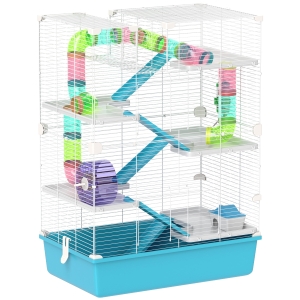
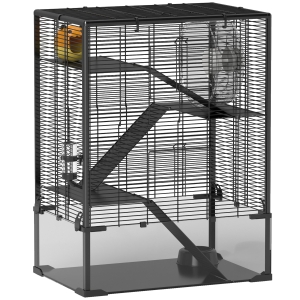

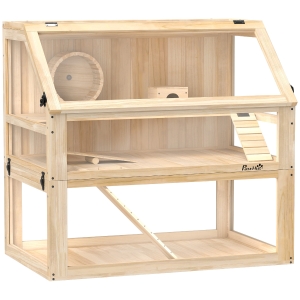
REAL-LIFE HAMSTER HOMES
REAL-LIFE HAMSTER HOMES
Discover thoughtful set-ups, clever ideas and little details that make a hamster's habitat feel more complete.


HAMSTER HABITAT FAQS
1. What Size Habitat Does My Hamster Need?
The right habitat should provide enough continuous floor space for your hamster to explore, with room for deep bedding, a suitable wheel, hiding places and other essentials. Check the internal dimensions rather than relying on the overall height or number of levels.
2. How Deep Should Hamster Bedding Be?
Hamsters need suitable bedding that allows them to dig and create burrows. Aim for a deep, stable layer of at least 20 cm where possible, and check that the habitat can accommodate it without compromising ventilation or usable space.
3. What Should I Include in a Hamster Habitat?
Essential items include suitable bedding, an appropriately sized solid-surface wheel, a secure hiding place, fresh water, food and opportunities for enrichment. A sand bath and tunnels can also help create a more varied environment.
4. How Much Floor Space Does a Hamster Need?
Floor space is an important consideration when choosing a habitat. Prioritise a generous, continuous base area that allows your hamster to explore and accommodate its essential furnishings. Additional levels can provide variety, but should not replace adequate floor space.
5. How Often Should I Clean My Hamster's Habitat?
Remove soiled bedding and leftover fresh food regularly, and check the habitat daily. Spot-clean as needed, replacing bedding and cleaning the enclosure when necessary. Avoid removing all familiar nesting material at once, as retaining some clean, familiar bedding can help reduce stress.
6. How Do I Choose a Habitat for My Hamster's Species?
Consider your hamster's species, adult size, activity levels and individual needs. Syrian hamsters generally need larger accessories than dwarf hamsters, particularly when choosing a wheel. Always check the habitat's internal dimensions, ventilation and suitability before purchasing.
7. Are Multi-Level Hamster Cages Suitable?
Multi-level habitats can provide additional opportunities to explore, but height alone does not make a habitat suitable. Look for adequate continuous floor space, safe access between levels and enough room for deep bedding and essential accessories.
8. What Should I Check Before Buying a Wooden Hamster Cage?
Check the internal dimensions, ventilation, access points, construction and how the materials can be cleaned and maintained. Wood may absorb moisture and be difficult to disinfect thoroughly, so confirm that the design and materials are appropriate for hamster housing before choosing a wooden habitat.
A well-planned hamster habitat needs more than platforms and places to play. It should offer plenty of continuous floor space, a suitable area for deep bedding, sheltered hiding places and room for natural activities. The wooden hamster homes featured in this guide offer different layouts and practical features to compare, helping you identify what matters most before choosing an enclosure.
More Space for Exploring and Resting
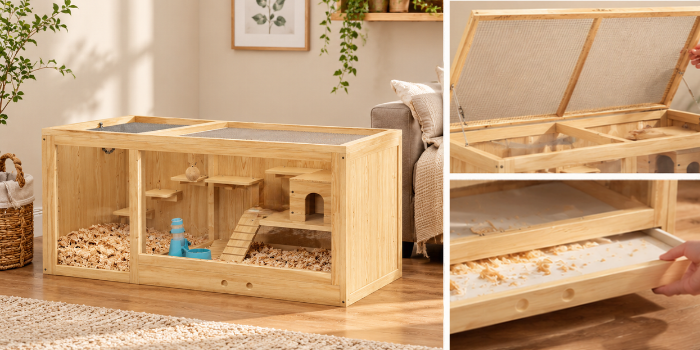
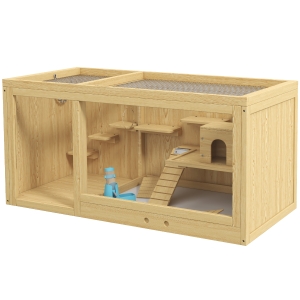
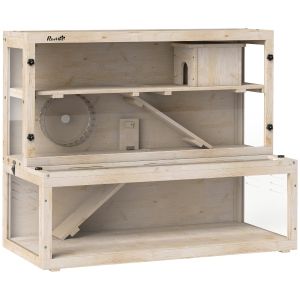
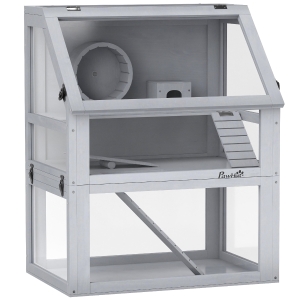
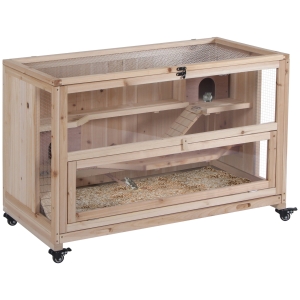
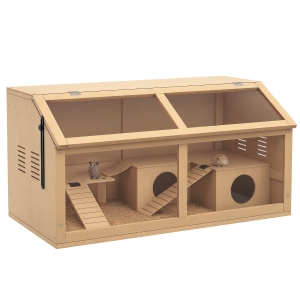
When planning your hamster's living space, start with the main floor area and consider how the enclosure can accommodate bedding, a wheel, hiding places and enrichment. The PawHut wooden hamster cage with an openable roof and platforms features a wooden frame, two platforms and connecting ramps, offering different areas to arrange your pet's surroundings. Its opening roof also provides convenient access for routine care.
Remember that platforms are additional features rather than a replacement for continuous floor space. Check the internal dimensions and whether the layout can accommodate suitable bedding and essential accessories without restricting movement.
Practical Access for Everyday Cleaning
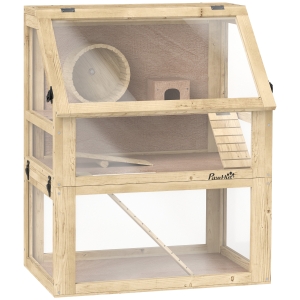
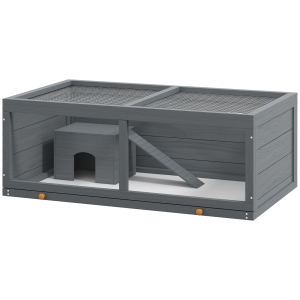
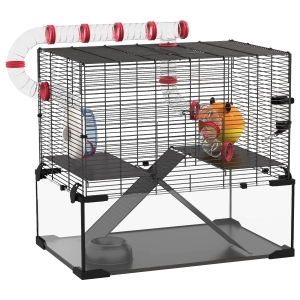
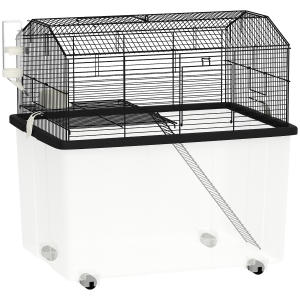
Easy access can make feeding, checking bedding and maintaining a hamster enclosure more manageable. The PawHut wooden hamster cage with a sliding tray and water bottle includes an opening roof, removable tray, wooden platforms, a hut and seesaws. These features provide different spaces for everyday activities and make parts of the enclosure easier to reach.
When considering a cage with a removable tray, check the depth available for bedding in the main living area. A convenient cleaning feature should not limit your hamster's opportunity to dig and burrow.
Clear Viewing Panels and Accessible Living Areas
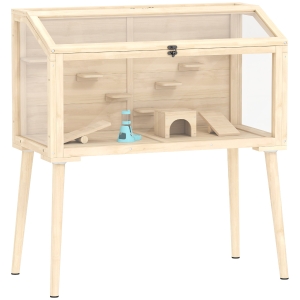
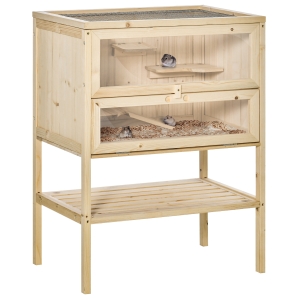
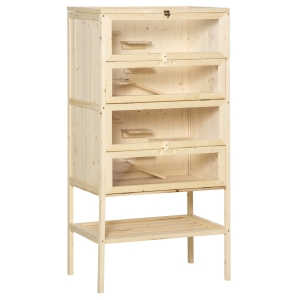
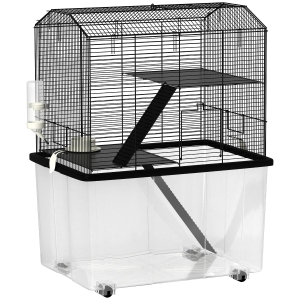
A clear front panel makes it easier to observe your hamster without frequently opening the enclosure. The PawHut wooden hamster habitat with clear viewing panels and a raised stand features transparent PET panels, an opening top, a wooden hideout and activity accessories. Its raised design also provides space beneath the enclosure.
When comparing raised hamster homes, distinguish the overall product height from the actual living space. Make sure the enclosure offers sufficient usable floor area and that any platforms or accessories can be arranged safely.
Creating a Habitat Around Your Hamster's Natural Behaviour
Hamsters naturally spend time digging, nesting, foraging and exploring. A suitable enclosure should allow these activities rather than relying on decorative features alone.
- Continuous floor space: Prioritise a generous, uninterrupted base area. UK animal welfare organisations recommend at least 100 x 50 cm of floor space, with larger accommodation preferable.
- Burrowing opportunities: Provide at least 20 cm of suitable bedding for digging and nesting, ensuring the enclosure can accommodate it securely.
- Hiding and resting: Include sheltered areas where your hamster can sleep undisturbed, away from busy activity spaces.
- Exercise and enrichment: Allow room for an appropriately sized, solid-surface wheel, safe tunnels, a sand bath and opportunities to forage.
- Access and maintenance: Consider secure doors, adequate ventilation and surfaces that can be cleaned without disturbing your hamster unnecessarily.
Explore our Hamster Hutches & Cages to compare wooden enclosures, different layouts and practical care features. Before buying, review the individual product specifications, confirm the internal dimensions and check which accessories are included.
Whether you are planning a new habitat or improving an existing one, choose a design that supports your hamster's species-specific needs, natural behaviour and everyday care. A comfortable home starts with suitable space and a thoughtfully arranged environment.